Many restaurants are thinking about subscription software to:
-
Improve operations
-
Lower costs
-
Grow
In restaurants, subscription software provides access to:
Subscriptions in restaurants are growing. 82 % of restaurant leaders plan to increase digital investments (Deloitte, Jun 2025).
Restaurants are moving from buying software directly to a subscription model. It allows for:
This article explains:
-
Pricing
-
Money management
-
Customer relationships
It helps you pick the right subscriptions.
1. Understanding Subscription Software
Restaurants can choose between buying software or a subscription.
What Is Subscription Software?
Software-as-a-service (SaaS) gives restaurants the software for a subscription fee. This lets operators use it based on their needs.
SaaS products are online and updated automatically. This means no upgrades are needed.
Subscription vs. One-Time Purchase
A one-time purchase model requires a single payment. But it gives restaurants permanent access to the software. While this may seem smart at first, it can lead to hidden costs from:
-
Upgrades
-
Up keep
-
Growth limitations
Subscription software has:
-
Automatic updates
-
Cloud access
-
Flexibility
Companies like subscription because it makes ongoing sales. Restaurants like it because costs are steady.
Types of Restaurant Subscription Services
Cloud SaaS is the most common. These products can be used across many locations.
On-site subscription licenses still exist. This is an option if you need offline access.
Mixed models combine them. A restaurant might run its reservation system in-house while using a cloud loyalty program for marketing automation.
2. Subscription Pricing
Use pricing impacts your restaurant. With your subscription, you must understand how to:
3 Common Subscription Pricing Strategies
- Usage-based pricing charges restaurants according to volume or users.
- A tiered pricing model offers levels of access.
- A free model provides free users with limited access. A small coffee shop business might use a free loyalty app to trial.
These are the types of subscriptions for restaurants.
Setting Your Subscription Fee Structure
Restaurants choose between monthly and yearly plans. Monthly subscriptions have lower upfront costs. Yearly payments may provide savings.
Overpricing can cause people not to join. Pricing too low might not make you enough money. See what your competition is doing.
Pricing Model Testing
Testing lets restaurants know the best option. Avoiding billing errors is a must.
3. Building a Subscription Business Plan
Subscriptions need software and a business model that balances:
-
Sales
-
Paying customers
-
Good operations
Restaurants must check their financials closely.
Sales Management Tips
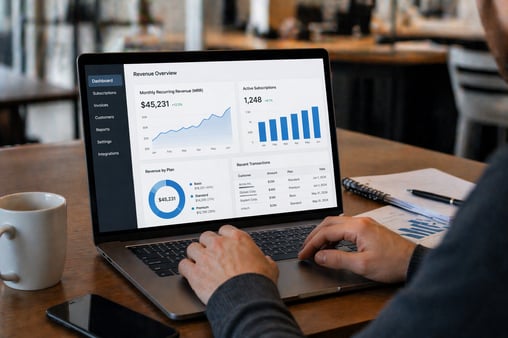
Manage revenue by tracking monthly recurring revenue (MRR) and active subscriptions. Find stores that aren't doing well and check MRR to plan staffing.
Your sales tracking must be accurate. That is extra true if you are growing a restaurant loyalty program or adding subscription catering options.
Revenue Benefits
Steady revenue keeps cash stable. Restaurants can plan income correctly.
Stable revenue also strengthens relationships with investors.
Customer Lifetime Value (CLV)
Calculating CLV is a must for profits. Restaurants can estimate sales per subscriber to create a strategy.
Getting the most out of CLV involves:
A quick-service restaurant (QSR) might offer special menu items. A fine-dining place might give VIP perks.
4. Managing Customer Relationships in Subscription Software
Subscriptions depend on good relationships. Do this by offering:
-
Great communication
-
Clear value
-
Support
Building Stronger Customer Relationships
Customer relationship management (CRM) tools track:
-
Interactions
-
Subscriptions
-
Service preferences
Restaurants can send:
-
Offers
-
Reminders
-
Loyalty rewards
They can do this with online ordering and in-store visits.
Use automated alerts for:
Restaurants can also automate billing to reduce staff workload.
Keeping More Customers
Understanding why subscribers cancel helps you keep more customers. Common reasons include:
-
Pricing
-
Unused features
-
Service gaps
Handling these boosts customer relationships.
Tips for keeping more customers include:
-
Flexible plans
-
Personal rewards
-
More engagement
Restaurants can keep customer loyalty across locations by:
-
Checking activity
-
Changing offers
-
Better communication
Solutions like Paytronix help restaurants:
-
Track customer signs
-
Group users
-
Automate loyalty
-
Make promos
-
Check data
5. Tech Set-Up
Using subscription software in restaurants needs planning to make sure you keep up a great guest experience. Think about:
-
Tech set-up
-
Subscription process
-
Software up keep
SaaS Set-Up
SaaS companies are different than traditional software. Restaurants can use online access. This lets staff log in from many devices and remotely.
You need good internet to use the cloud. A multilocation restaurant chain needs good Wi-Fi or cell backup.
Make sure to control access to protect your data.
Subscription Tools
Keep your systems in one place. Automated workflows handle:
-
Pay as you use it
-
Upgrades
-
Cancellations
Connecting with payment systems limits errors. Save time with:
Software Updates
Subscription models update without you having to do anything. Restaurants get:
-
New features
-
Security updates
-
Other updates
SaaS lets you focus on actually running your restaurant instead of software.
6. Money Benefits for Restaurants
Subscription software helps with:
-
Money planning
-
Predictability
-
Flexibility
-
Growth
By spreading costs via subscription, your staff can better manage the budget.
Cost Review
Traditional software requires a lot of money up front. That can be tough for small restaurants. Instead, a monthly fee allows restaurants to budget.
A single café might avoid a $20,000 software purchase by paying $500 per month instead. A chain can grow costs predictably as new stores open. You need to truly understand your business to pick the right option.
Sales Reporting
Businesses must track recurring payments. Good reporting:
Using Paytronix reporting, restaurants can:
Business Growth
Subscription software allows for growth. A restaurant can add locations and adjust service levels.
A pizza shop expanding from three to ten locations can onboard new stores using the same software subscription model. Flexibility also allows seasonal adjustments, and restaurants can scale down software services temporarily when needed.
7. Choosing Software Providers for Your Restaurant
Choosing the right software provider is as important as selecting the software. You need software providers who:
Choosing Software Companies
When choosing software, focus on:
This includes:
Ask about 24/7 support and access. That limits issues during set-up.
Restaurants should think about connecting with:
-
POS
-
Loyalty
-
Inventory systems
Use case studies to show off your success.
Many SaaS Options Comparison
Different SaaS products vary in:
-
Features
-
Integrations
-
Pricing
Restaurants should know how each platform impacts operations.
Know if the provider can:
-
Grow usage
-
Change service levels
-
Work out terms
Use a checklist to help make your decision.
8. 6 Tips for Restaurant Subscription Success
Managing restaurant subscription software needs structure:
-
Good set-up
-
Check performance
-
Measure ROI
-
Find ways to improve
Set-Up Strategies
- Selling software: Begin with a slow rollout.
- Training staff: Providing training stops errors in order management, reporting, and loyalty platforms.
- Measuring ROI from subscriptions: Track data. Compare labor hours saved.
Ongoing Improvement
- Review the subscription services’ value
- Know when to upgrade or modify subscriptions
- Negotiate with vendors for better terms
FAQs About Subscription Software
You probably have questions about subscription software. Here are the answers.
What is subscription software?
It provides ongoing access to applications or services with ongoing payments. It lets restaurants and c-stores:
-
Grow
-
Get automatic updates
-
Use online tools
What are the good and bad of subscriptions?
The good includes:
-
Steady sales
-
Lower investment
-
Growth
-
Updates
The bad may involve:
-
Ongoing fees
-
Locked into one vendor
-
Spending too much
Restaurants can also save money by selecting the right plan.
What are the differences between B2B and B2C subscription software?
B2B software focuses on:
B2C software targets:
-
Loyalty programs
-
Engagement tools
-
Personal offers
What This Means for You
Understanding subscription software helps restaurants to:
Choosing the right software subscription balances:
Subscriptions make the customer experience better by:
-
Improving experiences
-
Timely updates
-
Personal options
Restaurants can offer unlimited access to digital menus or loyalty rewards to get more engagement.
Now is the time to:
Book a demo with Paytronix to get expert tips and download the 2025 Personalization Mini Report.

 Kristin Lynch





 Michelle Casey : Feb 26, 2019