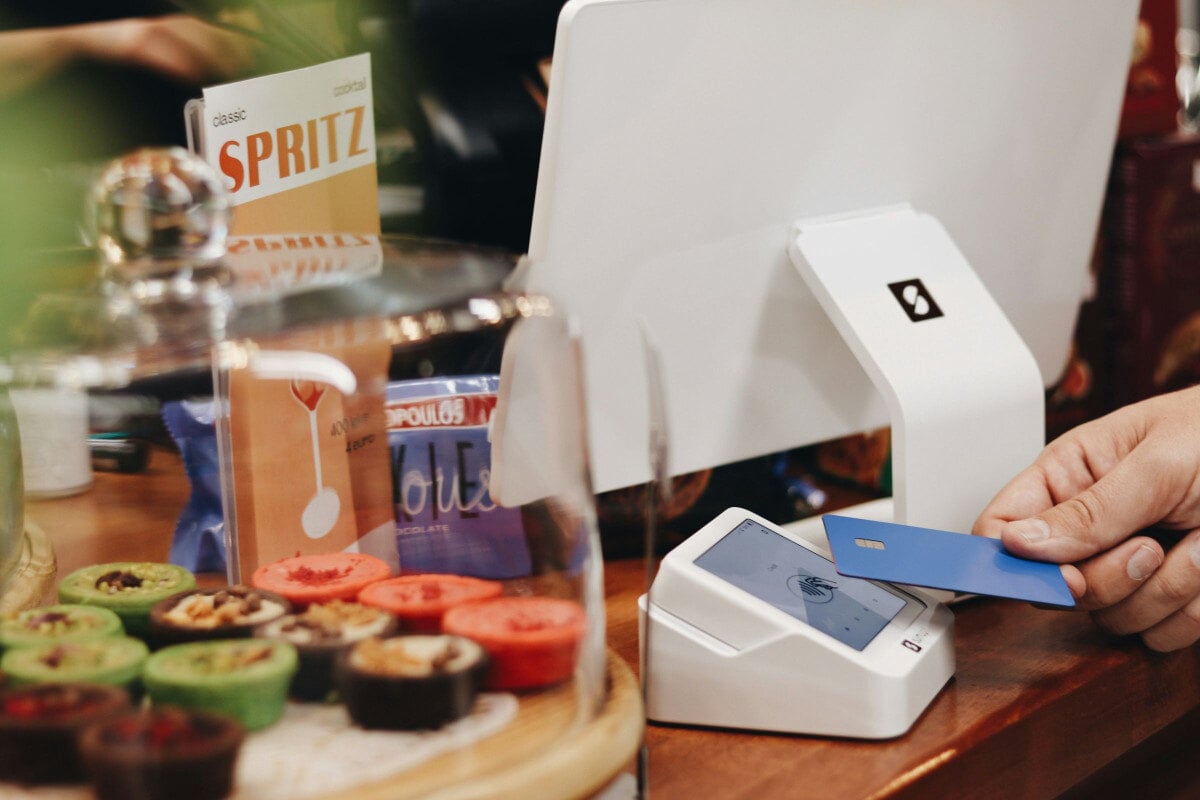
TL;DR: The right POS systems support operators by reducing labor costs and providing greater access to data to improve efficiency, but the wrong system causes issues that compound over time. Many operators focus on price first, but three features are more important for long-term ROI.
-
Why it matters: A POS system connects with every part of your business, from payments to inventory, guest data, and staffing. Switching POS systems is expensive, so choosing the right one the first time matters.
-
Who this is for: Restaurant operators evaluating a new POS system, whether opening a first location or upgrading the current setup.
-
Who can skip this: Operators who recently installed a new POS system that they're satisfied with and aren't looking for a new system.
-
What you'll walk away with: A clear framework for comparing POS systems on the features that drive ROI (beyond pricing considerations).
-
Most common next step: Contacting a POS system operator to schedule a demo or understand pricing.
POS systems, also known as a point-of-sale system, allow restaurants to run operations from staffing to vendor orders, streamline efficiency, and take care of what matters: Making good food and keeping customers happy.
Choose the right POS system based on your business's needs. Whether you struggle with tracking inventory, managing payments, or collecting customer data across your marketing channels, the right POS system provides the right infrastructure for success.
In this article, we’ll explore the factors to consider when choosing a POS system and rank systems by usability and return on investment (ROI).
Choosing the Best POS System
To select the best POS system, you’ll have to narrow down your business's needs first. Have food and staffing costs reached an all-time high? Then having an operation system that helps you track and reduce costs is a necessity.
For other businesses with multiple locations, it may be hard to stay on top of it all, or smaller restaurants may be struggling to switch to omnichannel ordering, where guests can place dine-in, pickup, delivery, or mobile orders in one place.
Assessing Your Needs
Before signing up with a new POS service, you’ll need to assess your restaurant's specific needs.
Here are the top considerations for POS systems:
- How many locations are you operating, and which need a POS system integrated?
- What type of services do you require? For example, cafes may require slightly different services than full-service or quick-service restaurants (QSR).
- What features do you require? Inventory management, reporting/analysis, customer management tools, multistore management, omnichannel integration, etc.
- Consider the necessary hardware to run the system successfully at all locations (and the associated costs).
- Review pricing models and assess affordability for your business.
- Consider the level of customer support your team needs to ensure a smooth transition to a new POS system.
- Search for POS providers that offer customizable solutions, especially if you have a unique or busy business.
- Consider POS systems and their integrations with your existing accounting software.
Considering all these factors will help you determine which software works best and integrates most effectively with your business.
13 Key Features of a POS System
POS systems offer a range of benefits, from processing payments to customization tools for leaders. Here are the top features to look for when selecting a new system.
Key features of a POS system include:
1. Inventory Management
Keep track of your restaurant inventory with automated systems that update and adjust stock levels and send alerts when you’re running low on items. An inventory management system also allows you to automate reordering to reduce overstocking.
2. Payment Processing
An essential function of every POS system is managing sales transactions securely. The best systems offer different payment methods, including debit and credit cards, cash, mobile payments, and other contactless experiences.
Specific POS systems may also integrate with secure payment gateways to protect customer data, prevent fraud, and remain compliant.
3. Employee (Human Resource) Management
Modern POS systems include employee management tools that cover everything from payroll to time-tracking and scheduling. Having these tools integrated into the system allows owners to monitor and oversee employees at a micro level while creating reports on attendance, labor costs and, in some cases, individual performance.
Full-service restaurants, QSRs, bars, and cafes need a system that tracks transactions by table. This makes it easy for employees to print the bill and accept payment.
Popular restaurants may also require reservation tools, which should integrate into the system to track data.
5. Customer Loyalty Programs
Custom loyalty programs that integrate with your POS system let you offer the best rewards and increase overall spend per guest.
6. Customer Relationship Management
Store customer data, track purchases over time, and build strong guest relationships with a restaurant CRM. With the best POS systems, you can build targeted offers and personalized marketing campaigns using historical customer data and demographics.
7. Profit Management Tools
Leaders can track data for profit management, helping your restaurant optimize operations and increase revenue.
8. Offline Mode
Inevitably, you’ll occasionally have challenging moments, like when guest Wi-Fi goes down and your systems don’t stay online. In these situations, a POS system with offline mode lets you keep running your business until everything comes back online.
9. Real-Time Reporting
Real-time reporting is typically offered through cloud-based POS systems. They ensure efficient operations and allow those in charge to make immediate changes or corrections.
10. Integration
POS systems should integrate well (ideally with minimal support) with suppliers, sales channels, loyalty programs, and customer relationship management tools.
11. Security
A secure POS system can protect your business's sensitive data, as well as that of employees, vendors, and customers. Security is fundamental in an age when most information is online.
12. Analytics and Reporting
Data helps your business go from good to great. With POS software, you can track best-selling items and sales trends and prepare for peak seasonal spending.
13. Customizable Features
Not all business needs are “one-size-fits-all.” To truly meet your needs, a POS system should offer flexibility and customization. This may be add-ons after you start using the system or software created exclusively for your business.
Top 5 POS Systems for Restaurants
Top restaurant POS systems include Lightspeed Restaurant, Square, and Toast, each offering unique features and pricing plans.
1. Lightspeed Restaurant
Many high-quality restaurants with complex operations choose Lightspeed Restaurant. The POS system offers features including inventory tracking, customizable menus, employee management, customer loyalty programs, reporting, customer management, and table management.
As a software, it’s designed for multilocation restaurants seeking real-time reporting and centralized management.
Hardware: Businesses can build their own hardware stack, which can include POS terminals, individual payment terminals, receipt and kitchen printer, kitchen display systems, and barcode scanners.
2. Square
Square POS offers a free tier, a card reader, and online ordering, making it a popular choice for small businesses and food trucks.
Square is a popular POS system, especially for those opening their first cafe or restaurant. One reason for its popularity is that there are no startup costs or fees for the basic software. Instead, they charge a percentage fee per transaction as a processing fee.
Square’s core POS system includes payment processing, customer relationship management (CRM), reporting and analytics, inventory management, employee and team management, and eCommerce integrations.
It’s popular among many businesses, including retail brands.
Hardware: Square offers hardware kits that include terminals, readers, kiosks, and handheld devices.
3. Toast
Many business owners run successful businesses with Toast POS software. Designed for restaurants, it has everything you need to run a business successfully.
With a cloud-based software, the system integrates payment processing, team/staff management, online ordering, reporting and analytics, menu management, payroll, loyalty program, and inventory management.
One key note is that Toast is an Android-based system and isn’t compatible with Apple's iOS.
Hardware: Handheld devices, kiosks, kitchen display systems, card readers, and terminals.
4. Tray
Ideal for QSRs, Tray POS is a cloud-based platform. The system offers a range of integrations, including self-order kiosks, mobile app ordering, and an online ordering and delivery system.
Tray operates on legacy Windows hardware and new Android hardware. It’s particularly popular in business settings, such as amusement parks, restaurants, and family entertainment businesses.
Hardware: Android hardware, kitchen display system, self-serve kiosk, and handheld devices.
5. TabitPOS
A technology company that offers a mobile POS system for businesses in the hospitality industry. Clients get access to a MobileFirst POS system with features like loyalty programs, reporting and analytics, tableside ordering, inventory management, menu management, payment processing, and employee management.
Tabit helps restaurants and large hotel chains manage hospitality operations in their kitchens and restaurants efficiently.
Hardware: Self-service kiosks, handheld devices, payment systems, POS systems, and scheduling.
POS Software and Hardware
POS systems run on software and require the necessary hardware in-store.
POS Software
Whichever POS software you select, it should be user-friendly, making it easy for your customers to spend money at your establishment. Tech should enable scalability across inventory management and operational processes, including table management and loyalty programs.
Built-in accounting software also reduces the overall burden of running a business and provides high-quality resources for leaders. Other features, such as online ordering platforms, allow leaders to scale their businesses and offer more of their offerings outside the physical store.
When selecting a system, we recommend considering options with a knowledge center and those with in-depth reviews from other users. Those offering a free trial are a bonus as it ensures it meets your restaurant's needs.
Other POS Software Features to Consider
Features such as barcode scanners, an Android app, and offline mode can improve operational efficiency.
POS Hardware
Businesses require both software and physical hardware to run their operations.
POS hardware includes:
- POS terminals
- Receipt printers
- Cash drawers
- Kitchen display systems
- Kiosks
- Card readers
- Tablets or smartphones
- Bar code scanners
All of which should be durable, reliable, and easy to use.
Bonus hardware installation to consider includes:
- Portable card machines
- QR code scanning
- Apple Pay integration
All to improve guest convenience and overall satisfaction.
Customer Loyalty and Retention
Retaining customers and increasing customer loyalty are the ultimate goals with each sale or customer visit.
Customer Loyalty
Customer loyalty programs are an essential part of restaurant marketing and are among the main drivers of customer retention and increased revenue.
POS systems that support your business should include features, such as integrated or built-in customer loyalty programs, online ordering (with delivery features), and customer displays to enhance customer engagement. The more customers can engage with your brand, the more they like you (usually).
Consider a POS system with advanced features, such as customer base tracking, shift management, and custom pricing, to optimize customer loyalty.
POS System Pricing and Costs
We’ll cover what you should know about pricing and the starting prices for the top five POS systems.
The Full Scoop on POS Pricing
POS system pricing and total costs vary depending on the features, provider, and number of locations. It will also depend on how much hardware your business requires and if you need to customize the platform.
Look for POS systems with transparent pricing and no hidden fees. Scalable plans that can go both up and down allow for affordability. Consider all applicable fees, including processing and monthly fees, plus total hardware costs.
POS Start-Up Pricing Costs for the Best Systems
- Lightspeed Restaurant offers a starter price of $69 per month, with additional credit card processing fees for add-on features and hardware.
- Square offers a free trial and charges per-transaction fees with no charges for core hardware.
- Toast provides business owners with a free starter package that includes one terminal. Additional features and hardware come at an extra cost.
- Tray POS starts at $69 per month for its basic package with additional credit card processing fees.
- TabIt POS offers a basic package at $69 per month. It also charges additional credit card processing fees and advanced feature fees.
Complex Operations and POS Systems
Not all POS systems are a “one-size-fits-all.” Those with complex operations will need a system that can support them.
Managing Complex Operations
POS systems should be capable of running your complex operation and be ready to handle multiple locations, customer loyalty programs, real-time data, and inventory tracking.
Consider a POS system with advanced features, such as in-depth inventory management, employee management, and profit management tools, to improve operational efficiency.
The Bottom Line
The right POS system serves your business's needs while elevating the guest experience. Our hundreds of POS integrations offer broad and deep functionality so you can run your business effectively without managing dozens of platforms.
Book a demo today to see our all-in-one POS solutions in action.

 Julia Bigwood



 Kristin Lynch : Oct 09, 2024