Turning customers into regulars is a challenge for a restaurant or c-store owner. Getting loyalty needs real marketing efforts.
Random campaigns don't cut it. A clear sales funnel guides your customers from first discovery to repeat visits. It gives structure for your strategy.
A good customer journey means understanding how strangers become guests. Then you need to know why they tell others about your brand. Marketing and in-store experiences work best when they connect:
-
Acquisition
-
Conversion
-
Retention
-
Loyalty
52% of consumers already take part in restaurant loyalty programs. 96% say these programs improve their visits.
Loyalty platforms help improve relationships with your customers. This article explores:
1. Understanding Restaurant Marketing Funnels
Know your marketing funnel and how customers find your restaurant. Each interaction with your brand moves them along the buying journey.
What Is a Marketing Funnel for Restaurants?
It guides diners from the awareness stage to becoming people who tell others. Restaurants should connect each stage with loyalty levels.
Marketing automation tools allow customers to progress through the funnel. Paytronix says that restaurants see 35% higher customer lifetime value and 50% better retention rates.
The Marketing Funnel Stages
There are five stages, each relying on:
-
Testing
-
Data
-
Customer info
Tracking every interaction to improve your marketing.
- Awareness: Get attention through social media and local ads.
- Consideration: Allow for trials, reviews, and special offers.
- Purchase: Make interest become a first visit.
- Retention: Keep customers with rewards, discounts, or follow-ups.
- Loyalty: Get happy customers telling others about your brand.
2. Top-of-Funnel Tips
The top of the funnel (TOFU) focuses on attracting people who haven’t interacted with your brand yet. Restaurants can use:
Funnel Marketing for Discovery
Get new customers with marketing that stands out. Try sharing social media posts with:
-
Your best dishes
-
Behind-the-scenes prep
-
Staff spotlights
Partner with local food bloggers to do tasting videos or events. Community events boost visibility and traffic.
Building Brand Recognition
Consistency boosts recognition and loyalty. Use story-driven posts and a brand identity so people remember your brand when deciding where to eat.
3. Middle-Funnel Tips
Once guests know about you, restaurants need to keep them interested. The middle of the funnel (MOFU) is where visitors:
-
Check out your offerings
-
Compare
-
Decide to give you a try
Paytronix solutions says that understanding this funnel helps you get more visitors.
Make sure to track all customer interactions.
Ad Funnels That Drive Trial
Social media and search campaigns can be a form a paid media funnel that helps people learn about your restaurant. Try these tips:
- Targeted social media: highlight dishes or local specials.
- Google Analytics: Check website traffic to see which pages are working.
- Landing pages: create pages for seasonal menus.
- Email: Send personal messages.
- Remarketing: reconnect with visitors who showed interest.
- Good content: videos and blog posts that show your food.
Removing Purchase Barriers
Restaurants can make trial easier by:
- Risk reversal promos: Satisfaction guarantees or first-order discounts.
- Social proof: Reviews, ratings, and shared experiences.
- Menu previews: Show your menu so guests know what to expect.
- Reservation and online ordering systems: Make both easy to use.
4. Bottom-Funnel Conversion
At the bottom of the funnel (BOFU), the focus is on turning interest into a customer. Do this by:
Restaurants boost conversions by paying attention to the customer experience. Smooth interactions:
-
Boost trust
-
Make customers happy
-
Improve relationships
The Marketing Funnel Conversion
Turn leads into customers with:
- Clear Calls-to-Action (CTAs)
- Time-Sensitive Offers
- Purchase Stage Optimization
- Direct Communication Strategies
- Retargeting Campaigns
- Sales Representatives and Host Training
- Conversion Funnel Data
5. Keeping New Customers
After the first purchase, the goal changes to keeping the customer. Focus on customer retention.
Branding Funnel
Thank you messages make customers happy. Make sure to:
-
Use surveys
-
Review prompts
-
Send in-app messages
Follow-ups get customers to return.
Creating a Repeat Customer
Repeat business depends on smart actions. Examples include:
- Visit Frequency Improvement
- Personal Marketing Messages
- Birthday and Anniversary Programs
- Win-Back Campaigns
These tips can help restaurants:
6. Loyalty Program
Loyalty programs build relationships and support your goals.
Paytronix makes rewards easier to:
Doing this helps you build connections.
Loyalty and the Marketing Funnel
True loyalty gets people to tell others about your brand. Example programs include:
-
Starbucks Rewards
-
Chipotle Rewards
-
Dutch Bros Rewards
-
Peet’s Peetnik Rewards
They provide:
-
VIP experiences
-
Exclusive access
-
Recognition
Knowing your best customers helps get more people talking about your brand. Paytronix automates these tasks.
Engagement Tips
Loyalty keeps people returning because it feels personal. Examples include:
- Surprise and Delight Moments
- Community Building Initiatives
- Exclusive Events and Previews
- Referral Program Automation
- Consistent Experience
Data is Gold
Data collected through loyalty programs improves interactions. Understanding what your customers like lets you improve:
-
Messaging
-
Offers
-
Experiences
Data from your rewards system improve:
-
Marketing materials
-
Campaign management
-
Social media marketing
This data helps you keep more customers.
7. Full Funnel Marketing
Implementing a funnel marketing approach is where all your efforts start to pay off. By connecting each stage of the marketing journey, you make everything feel:
-
Intentional
-
Relevant
-
Consistent
Funnel Marketing Strategy
A funnel strategy needs integration across teams. Think about these:
When each stage is coordinated, your funnel moves smoothly and boosts customer engagement.
8. Advanced Segmentation and Personalization
Grouping and personalization at scale are a must. By understanding the differences among your customers, you can tailor:
-
Experiences
-
Offers
-
Communications
Funnel Strategy for Different Segments
Knowing which customers fit into which group helps you get better insights. Think about these:
- Customer lifetime value groups
- Behavioral targeting
- Content strategies
- Predictive analytics
Audience Funnel Tips
Personalization helps your brand stand out in competitive markets. Examples include:
- Family vs. business diners: Make separate marketing groups.
- Age-based approaches: Use Instagram and TikTok for younger audiences, emails for older ones.
- Occasion marketing: Promote birthday specials and events.
- Dietary targeting: Showcase vegan and gluten-free options.
9. Measurement and Optimization
Restaurants can map how customers move with:
-
Completed orders
-
Reservations
-
Repeat visits
Tracking performance at each stage provides insights to improve:
-
Social media engagement
-
Product pages
-
Other touchpoints
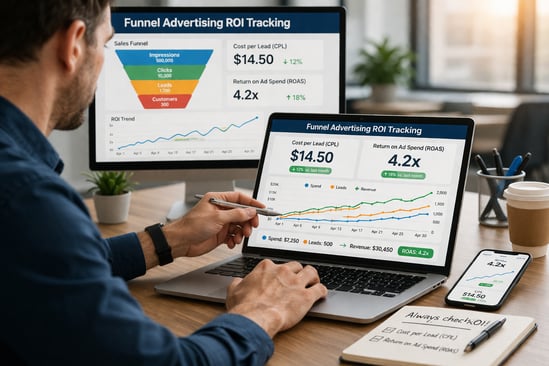
Funnel Advertising ROI Tracking
Always check ROI. Track cost per lead (CPL) and return on ad spend (ROAS).
Restaurants should track:
Knowing ROI helps you make a better budget.
Data Driven Decisions
- A/B Testing: Test variations of posts, landing pages, or promos.
- Performance: Compare campaign results to industry standards.
- Improvement: Focus on the stages of the marketing funnel that need changes.
- Reporting Dashboard: Put all of your data in one place.
10. Tech Tools
A smart tech stack supports every point of the digital marketing funnel, including:
-
First contact
-
Purchase
-
Engagement
Today’s tech offers platforms that help your marketing funnel strategy. These tools track the purchasing and consideration stage:
- Customer Relationship Management (CRM) and Loyalty Platform Integration
- Marketing Automation Selection
- Analytics Setup Essentials
- Tech Stack
FAQs About Restaurant and C-Store Marketing Funnels
Understanding your marketing funnel can improve loyalty. This section answers what is marketing funnel strategy and much more.
What are the 4 stages of a marketing funnel?
The marketing funnel concept breaks down into:
-
Awareness
-
Consideration
-
Conversion
-
Retention
What is the marketing funnel also known as? Some people refer to it as the sales funnel or customer journey funnel. Each stage targets different audience needs.
What is the 7 and 11 rule?
Customers need to see your brand 7-11 times before taking action. Use it to boost your brand.
What are the top 5 marketing strategies for B2C businesses?
Combine:
-
Content marketing
-
Social media
-
Personal loyalty
-
Email automation
-
Good customer experience
Together, these approaches support the customer journey by:
Is word of mouth a marketing strategy?
Yes, word of mouth relies on satisfied customers to promote your brand organically. Restaurants must think about:
What is the best pricing strategy?
The best pricing aligns with your product value. You also need to think about your competition.
Your 90-Day Funnel Plan
Funnel planning turns strategy into action. This:
Month 1: Start by clarifying your target market.
Month 2: Testing formats and adjusting marketing budgets.
Month 3: Reinforce habits with communication, rewards, and follow-ups.
Want to create a new marketing funnel campaign? Book a demo with Paytronix. Also, explore the 2025 Economic Resilience Toolkit.

 Michelle Casey





 Julia Bigwood : Aug 29, 2024