TL;DR: Customer journey software gathers data from your POS, online ordering, and marketing platforms into a single view of each guest, allowing you to predict what they’ll do next. Restaurants using the data well can see up to 40% higher lifetime value, and the tactics that get you there aren’t the obvious ones.
- Why it matters: Understanding the customer journey is the simplest way to see how and why your customers decide to spend money.
- Who this is for: Restaurant managers and operators looking to increase revenue.
- Who can skip this: Brand-new restaurant operators who are just getting started.
- What you’ll walk away with: A clear idea of what to track and target using customer journey data and how to turn that into revenue growth over time.
- Best next step to take: Connect your business platforms, including CRM, POS, online ordering, social engagement, and loyalty programs, so all customer data is in one place.
Most businesses struggle because they don't have a clear view of the user journey. That makes it hard to know where:
Disconnected systems limit visibility. Without a view of the marketing channels, teams rely on assumptions instead of customer insights.
Modern customer journey software solves this. It does it by getting data into a single view. But using the right data leads to happier customers.
These platforms connect:
This article explores eight software features that influence how your guests:
1. Behaviors That Drive Spending
These automated tasks react instantly to what users do while their intent is still high. This provides insights that lead to better service decisions and increased spend.
Customer Journey Platform Behavioral Data
Data tools spot patterns that humans often miss. A dessert abandonment recovery campaign can send an offer when a guest adds dessert but leaves before checkout.
Trigger messaging can help brands get a 15%–20% spend increase from upsell messages. These work because they arrive during decision moments when the customer is still ready to buy.
Examples
- Weekend visitors may ignore weekday specials. But a trigger can send an offer after their first visit. This encourages return visits.
- Lunch customers often have dinner potential, yet they may not convert without a message. A trigger can give a dinner offer after a lunch purchase.
- Families may skip appetizers when ordering quickly. But a message can increase check size without slowing service. Triggers can detect family orders and recommend a sharing appetizer.
2. Predictive Spend Modeling
Some guests start increasing their spend after only a couple of visits. Others don't. Predictive spend modeling shows these early signals. That lets teams spot respond before revenue opportunities slip away.
Customer Journey Management Software That Predicts Value
Predictive models mix data and customer profiles to create future value and spot opportunities early.
- Spotting future high spenders after two visits
- More accurate VIP prediction
- Small behavior data
- 40% higher lifetime value from early identification
Early Warning Systems
The real cost of losing a customer without noticing. These systems catch spending decline before they become a habit:
- Decline signals include fewer visits, smaller baskets, or changing favorite categories.
- Sends a personal message or offer.
- With quick action, businesses can recover 30-40% of at-risk revenue.
3. Personalization Engines
Personalization engines matter because customers buy experiences. Paytronix uses customer research and data to create personal journeys in real time.
Customer Journey Automation Platform for Personalized Experiences
- Individual journey optimization: Instead of big groups, the platform personalizes at the guest level.
- Behavior content: Campaigns change automatically when a customer’s habits shift.
- Higher email engagement: Brands using personalization see higher open and click-through rates (CTRs).
- 35% revenue increase per campaign
Personalization in Practice
- Time-based offers: Morning customers receive breakfast or coffee shop promotions, while evening visitors get dinner deals.
- Context-based recommendations: If a guest orders a burger, the system suggests sides or upgrades based on what similar customers added.
- Learning and adjustment: The engine updates itself as customer behavior changes.
4. Cross-Channel Journey
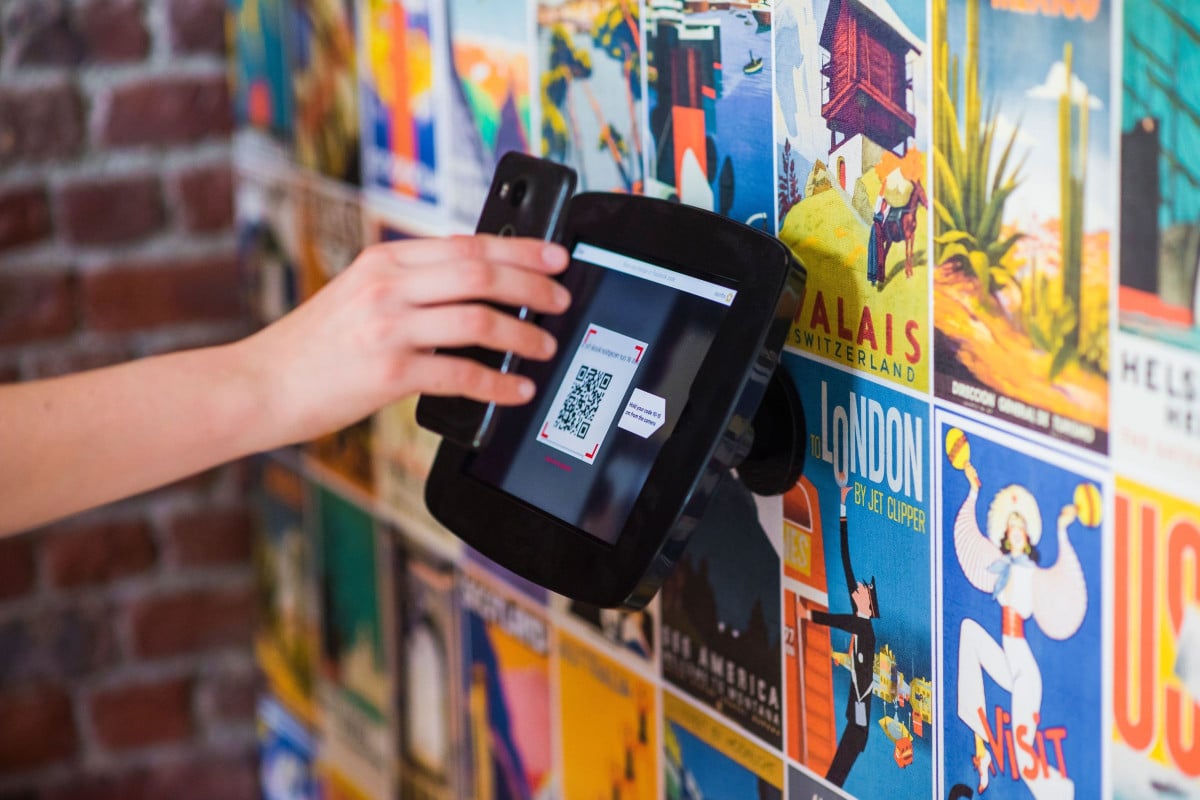
When customers switch between ordering online, using a QR code, or visiting in-store, it should feel the same. Cross-channel journey organizes the messages.
Unifying Touchpoints
This feature brings customer data into one place by connecting:
It helps teams understand channel usage.
Paytronix supports this by centralizing the journey view. This makes it easier to act on real behavior.
A restaurant might notice that guests who use mobile ordering are not returning to dine in. They could start a marketing campaign with offers sent by:
-
App notifications
-
Email
-
In-store offers
The Orchestration Advantage
Consistent messaging matters because customers notice when the story changes. If a guest sees a promo on social media, then gets a different offer by email, it decreases trust. When messages align, average ticket sizes may increase by 20-25%.
Breaking down data allows the entire team to stay focused. When everyone can track it, teams build marketing promotions that improve revenue.
5. Upsell Recommendations
A smart upsell system uses customer behavior and orders to suggest add-ons. The goal is to increase revenue by offering helpful choices, not by pushing extra items.
Machine Learning (ML) for Perfect Upsells
ML knows:
-
Purchase history
-
Basket choices
-
Time of day
-
Repeat behavior
It uses it to predict what a guest is most likely to add next. In restaurants, this can mean suggesting dessert after dinner or upgrading a guest’s drink.
The most common models find patterns among similar guests. Classification models score each offer based on its likelihood to convert. Use these to improve recommendations.
Context Upsell Suggestions
Upsell recommendations are more accurate when they use factors like:
-
Order type
-
Guest segment
-
Location
A platform may suggest a dessert only when the order is for dine-in, or offer a larger drink to a customer who often chooses upgrades.
AI chatbots can deliver these suggestions during ordering. This increases add-on rates because the recommendation arrives when the guest is already deciding.
Selling Through Intelligence
Effective upsells offer helpful suggestions based on customer behavior. This improves customer happiness while driving revenue.
6. Visual Journey Dashboards
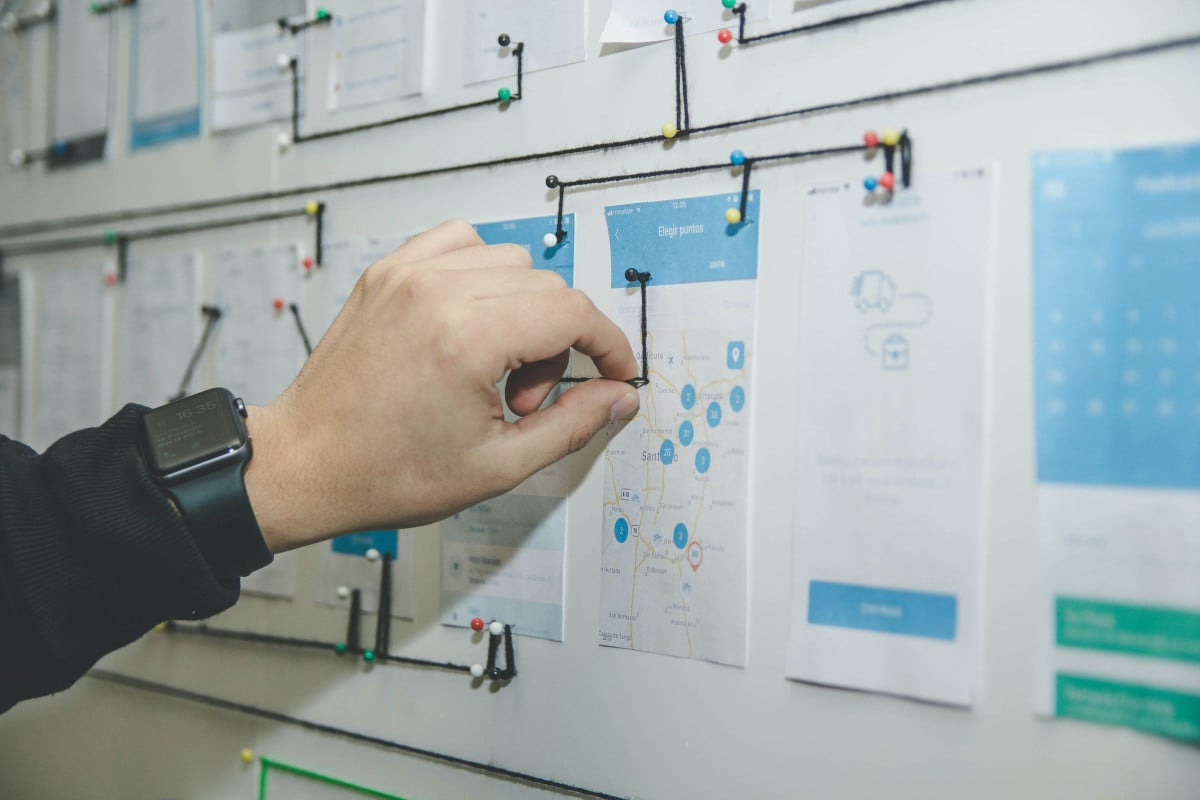
Instead of using spreadsheets, these dashboards turn user behavior into clear visual stories. Data visualization shows the full customer path in one place.
Journey Mapping
This feature creates user journey maps that show how customers interact across channels. Heat maps reveal spending triggers, such as loyalty members switching from lunch to dinner.
Funnel reports show the moments guests leave, such as abandoning checkout after selecting add-ons. Drag-and-drop dashboards make it easy for teams to move from insight to action.
Discovery Through Visualization
- Visualization makes it clear when a welcome email arrives too late, so teams can adjust timing and measure repeat visit impact.
- Mapping order paths reveals the best moment to suggest appetizers.
- Visualization also shows hidden revenue chances.
7. Testing Frameworks
When your customer journey includes digital channels and in-store visits, small changes make for big results. Testing frameworks let restaurants run experiments across:
Optimization Engines
These test:
-
Offers
-
Messages
-
Menu layouts
Then it chooses the best version based on real user behavior. Guests often behave differently across channels, like choosing more snacks on mobile apps and more full meals in-store.
Testing is needed because customer behavior differs across:
It reveals the best combinations of:
Winner identification means the platform notes the highest-performing option and uses it across the journey. Restaurants that use this see higher average checks and more repeat orders.
Rollout of Successful Strategies
- Test three versions of a dessert upsell, then use the best with all digital channels.
- Compare two loyalty reward structures in POS and mobile apps, then use the winning version across locations.
- Experiment with promo timing for breakfast vs. lunch, then chose the top-performing schedule across email and push notifications.
8. Integration and Implementation
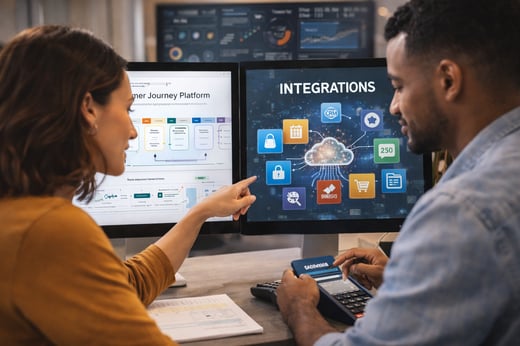
How you use it with your other systems is where a customer journey platform either becomes a growth engine or another dashboard. If the platform can’t connect to data, the full strategy doesn't work.
Making Journey Software Work
Once you understand the features, the next step is using them. The goal is to turn customer insights into actions:
- Data cleanliness matters because wrong data ruins outcomes. Before launching, check sources, align naming, and confirm integrations.
- Team buy-in is essential because your team working together is what turns insights into profit. Start with a small group, show quick wins, and share results.
- A phased rollout reduces risk and keeps momentum. Start with one location, prove that it works, then expand.
A 60- to 90-day ROI timeline often includes:
When teams make decisions from real customer feedback tools and data integrations, the platform becomes a part of the operation.
Frequently Asked Questions About Customer Journey Software
What is a customer journey automation platform and how does it differ from a standard CRM or marketing tool?
Customer journey automation (CJA) platforms differ from standard CRM platforms in how they track and identify customer interactions across channels and trigger responses in real time.
How does customer journey software map and personalize guest touchpoints across channels?
Customer journey software builds a single guest profile across channels and can trigger actions in real time or use predictive AI to personalize experiences.
What triggers should a restaurant or c-store use to activate automated customer journey flows?
Triggers should match the occasion linked to the flow. A birthday discount should land during the customer's birthday week; a “we miss you” campaign should trigger after the guest hasn’t visited in a set number of days.
How does a customer journey automation platform integrate with loyalty programs, POS, and email/SMS tools?
With the right connectivity features, CJA platforms can integrate with the rest of your tech stack, gathering customer data in one place across POS, online ordering, and social engagement tools.
What metrics should operators track to measure whether their customer journey automation is working?
Track conversion rates, customer retention, customer satisfaction, drop-off rates, and time in stage.
Making Your Decision
Start by focusing on a single part of the customer journey and making it work well before adding more. This keeps the project manageable.
Select features based on gaps found during customer journey mapping. Creating personas clarifies the different customer types.
Review the customer journey map using:
-
Customer feedback tools
-
Sticky notes
-
Stakeholder maps
Want to learn where to start? Book a demo with Paytronix. Download our Restaurant Economic Insights Mini Guide to learn what top restaurant brands do every month.

 Julia Bigwood





 Kristin Lynch : Dec 15, 2025