TL;DR: The strongest restaurant social media accounts succeed by matching their content style and hooks to the platforms they're using. What separates the top performers from the rest isn't creativity alone, though; it's how consistently they turn followers into repeat buyers.
- Why it matters: Diners increasingly decide where to eat based on what they see on social media, and the restaurants that build an authentic, platform-specific voice are converting that visibility into real traffic and loyalty.
- Who this is for: Restaurant marketers, social media managers, and multi-unit brand teams looking to sharpen their content strategy across platforms.
- Who doesn't need this article: Operators with no capacity to manage active social accounts right now. Download out our free eBooks and reports first.
- What you'll walk away with: Five real-world examples of restaurant brands excelling at humor, visual storytelling, user engagement, and trend adoption, plus practical tips for adapting these strategies to your own brand voice.
- Best next step to take: Pick one platform where your target diners are most active, study how a comparable brand shows up there, then test one new content format, like a poll, a behind-the-scenes post, or a UGC feature, this month.
Social media is changing marketing. The restaurant industry has seen some big changes over the last 20 years. A fun social media can take your eatery from being unknown to a must-try food stop.
Recent surveys show that half of diners would try a restaurant's food based on:
-
Instagram
-
Facebook
-
Twitter.
Social media does more than display your delicious dishes. They shape your restaurant's identity, talking with customers, and handling customer service.
Let’s highlight five top performers:
This article will explore how restaurants use social media. We’ll also show how their social media strategies can be adapted across the industry.
Showcasing Top Social Media Performers in the Restaurant Industry
Many restaurants have mastered social media. They have turned their online presence into a powerful brand asset.
Here’s a look at four top performers and their restaurant social media post examples:
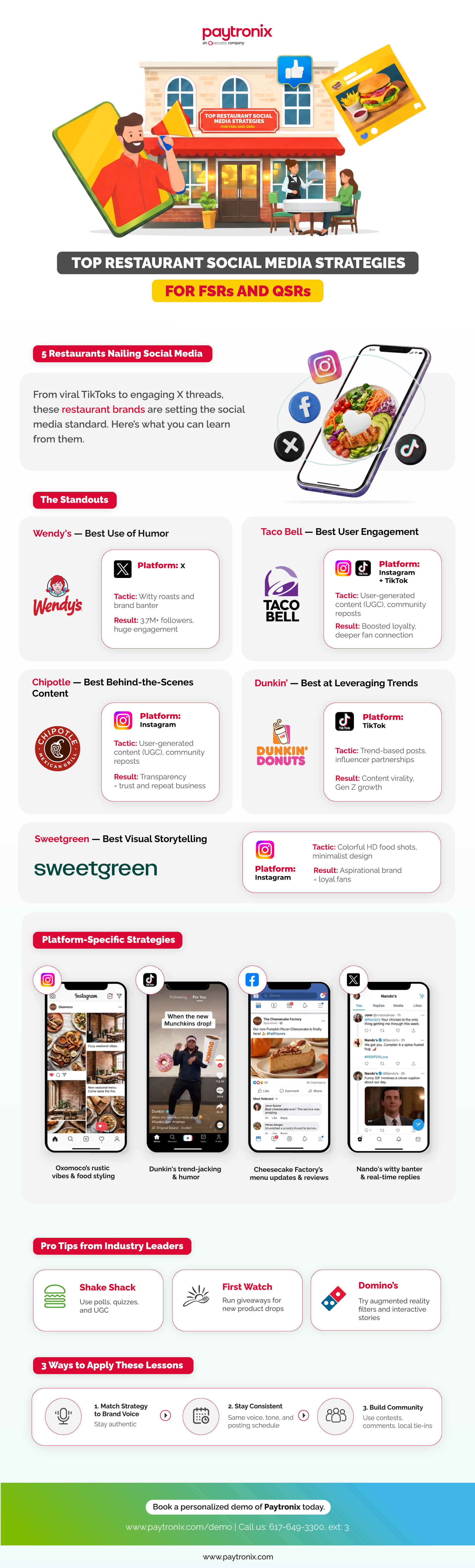
- Wendy’s: Known for its sharp and humorous interactions on X (formerly Twitter). Wendy’s creates a relatable image by talking with other brands and users. The strategy works. Wendy’s has over 3.7 million followers on X, driven by viral tweets and a distinct voice.
- Taco Bell: Shines in creating community vibe on socials like Instagram and TikTok. It loves user-generated content (UGC). Customers share their Taco Bell experiences. This boosts customer loyalty, making fans feel a part of the Taco Bell story.
- Chipotle: Engages its Instagram followers with images and detailed stories about its ingredients. This method emphasizes Chipotle’s dedication to quality and openness. The approach grabs the attention of healthy diners.
- Starbucks: Uses Instagram to blend striking visuals with seasonal promotional campaigns. An example is the iconic Pumpkin Spice Latte each fall. This use of content aligns with the seasons, keeping the brand relevant. Additionally, Starbucks stays authentic by featuring real customers enjoying their beverages.
Each restaurant's social media strategy enhances its brand presence and attracts followers. Partnering with restaurant influencers can boost impact by reaching larger audiences.
Why Different Strategies Suit Different Platforms
Top restaurants tailor their strategies to each social media platform to improve engagement. For example:
- Instagram: Oxomoco is a Michelin one-starred eatery in Brooklyn. It excites its audience with a stunning feed. It shows its colorful dishes and inviting energy. This matches Instagram’s focus on aesthetics and helps the restaurant stand out.
- TikTok: Dunkin' Donuts engages TikTok's youthful users. They do this with energetic videos featuring new menu items and promotional campaigns. They often use trending sounds and challenges to boost interaction and viral content. Their approach captures the "fun" of the platform, making their content shareable.
- Facebook: The Cheesecake Factory shares menu updates, events, and customer reviews. Facebook users are ideal for reaching varied customers with photos, videos, and reviews.
- X (Twitter): Nando’s uses X to engage with customers through witty and timely content. This is like Wendy’s approach, but with their brand personality. Their quick responses and banter with followers use Twitter’s real-time communication strengths.
Practicing Visual Storytelling Excellence
Quality photos and videos are essential for the restaurant’s social media posts. It makes the appeal of food elevated with compelling imagery. Here’s how three restaurants excel in visual storytelling:
-
Sweetgreen uses Instagram’s visual format with images of its salads and ingredients. They showcase their menu in eye-catching ways. This matches the healthy lifestyle they promote.
-
Bad Roman uses Instagram to show its story with a playful twist on Italian cuisine. Their profile has arranged dishes set against their stylish interior. It creates a modern culinary adventure mixed with traditional flavors.
-
Eleven Madison Park uses photos on Instagram to show how its signature dishes are made. Each post shows a meal and tell the story of the detail that goes into each dish.
Takeaways from 3 Top Restaurant Social Media Accounts
Social media offers a way to engage with customers and shape dining decisions. By analyzing top restaurant social media ideas, we:
1. Shake Shack's Interactive Offerings
Successful content blends many elements to maintain audience interest and encourage interaction.
Shake Shack combines mouth-watering images of its signature dish with engaging content. It features customers' photos and stories, highlighting the moments shared around its food.
Shake Shack often includes polls or quizzes on menu preferences or new flavor ideas. This asks followers to take part in the brand’s journey. Exploring new social media post ideas can grow engagement and keep content fresh.
2. First Watch's Giveaway Genius
Social media contests can transform social media followers into actual customers. First Watch’s “Tropical Sunrise Getaway Giveaway” is a good example. It promotes a new juice blend with a unique contest offering.
These campaigns do two things at once. First, it highlights products. Second, it gives incentives to encourage visits. Another successful strategy is integrating limited-time offers (LTOs) or flash sales. This creates urgency and immediate action from followers who don't want to miss out.
3. Domino's Use of Augmented Reality
Staying ahead of the trends can help attract social media users to your restaurant’s profile. Many restaurants use Instagram Stories to connect with their audience in real time. Polls, Q&A sessions, and augmented reality (AR) filters to add a twist to their digital interactions.
Domino’s Pizza uses AR filters on Instagram to introduce new products. This interactive approach has grown user interest and boosted engagement.
3 Tips on Winning Social Media Strategies in Your Restaurant
Effective social media strategies are a must for restaurants. These three strategies should reflect your restaurant's brand:
1. Adapting Successful Strategies to Fit Your Brand
Personalization is at the heart of successful social media marketing. It's helpful to look at what other brands are doing. But your social media strategy depends on how authentic and personal it is.
A family-owned pizzeria might want to highlight its community ties and heritage. A modern vegan cafe could focus on sustainability and healthy dining.
Learn more about tailoring your approach with our guide on loyalty marketing strategies.
2. Building an Authentic Social Media Voice
Create a consistent voice. This voice should be your restaurant's personality and can be:
-
Friendly
-
Playful
-
Sophisticated
-
Refined
Post in a style that captures your brand's values. This creates an fun presence that customers know and trust.
3. Engagement and Community Building Techniques
Good engagement goes beyond occasional posts and responses. It involves proactive interaction with the audience, such as:
-
Responding to comments
-
Featuring user-generated content
-
Taking part in relevant trending topics
Hosting local events, supporting local causes, or running contests create community. These drive engagement and build a loyal community around your restaurant.
The Power of Social Media in Restaurants
The influence of social media on the industry makes these platforms necessary tools. The strategies discussed show the impact of social media on a restaurant's success.
To stay creative:
-
Check out new social media features
-
Focus on visual content
-
Build a community to boost digital presence
Take the first step by implementing some of the strategies discussed here.
Ready to elevate your restaurant's digital strategy? Dive into our 2024 Loyalty Guide to learn how to integrate your:
-
Online ordering platform
-
Customer relationship management (CRM) platform
-
Mobile apps
Lead the way with techniques that make a difference.
Sources
- Restaurant Dive (citing a Merrill Global Hospitality/MGH survey). 45% of Diners Have Tried a Restaurant Because of Social Media. April 2019. restaurantdive.com
- Wendy's. Official X (formerly Twitter) profile, @Wendys. x.com

 Julia Bigwood


 Michelle Casey : Aug 20, 2024
.jpg)