Key Takeaway: Using data, automation, and AI helps you understand your guests and create better loyalty programs.
The restaurant and convenience industries are competitive. There are 2,286 new convenience stores and 53,800 new restaurants opening every year in the US. That's why using data and automation is a must for creating a good loyalty program. A leader in data loyalty marketing—Starbucks—placed 57% of all US sales in 2023 to Rewards members, according to eMarketer.
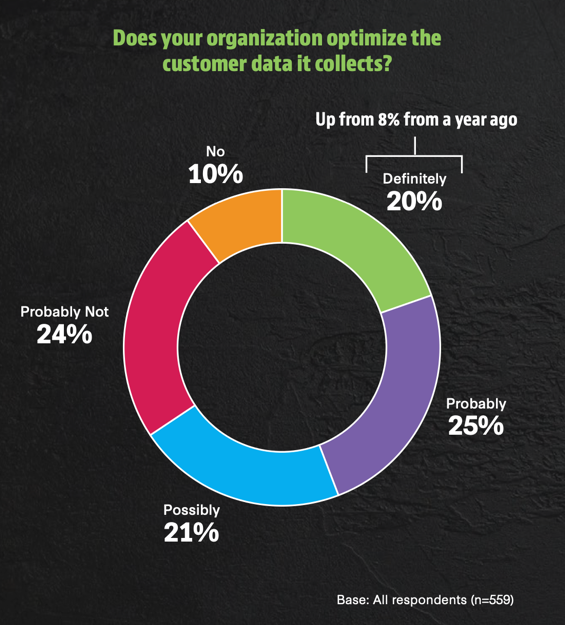
But most restaurants aren't using the customer data they collect. The Nation’s Restaurant News (NRN) 2024 Restaurant Technology Outlook says that only 20% of operators say they “definitely” use their customer data, while another 25% “probably” use it:
Operators need to understand how to use data to strengthen restaurant and convenience store loyalty programs. That's the only way to create personal loyalty experiences.
It’s time for operators to move beyond a name, email, and birthdate. Today’s best loyalty programs use real-time data to create guest experiences that increase:
Examples include using a guest’s location to promote a new offer and in-app nudges to complete a purchase.
Leaders in this include:
-
Starbucks
-
Amazon
-
Uber
-
Spotify
-
Netflix
-
Tesla
-
Apple
Some ways that they have raised the customer experience are by creating:
-
One-click purchasing
-
Free OS upgrades
-
Personal playlists
To create personalization, restaurants and convenience stores must learn the value of guest data for building loyalty programs that stand out.
Power Your Loyalty Program with First-Party Data
First-party data is the information you collect directly from guests. First-party data is directly under your control. It's more important now that third-party cookies have crumbled.
Every guest interaction generates data you can use to improve your loyalty rewards. To do that, you must track each guest’s:
By checking order histories, a guest who regularly orders salads could automatically earn bonus points for healthy choices. A busy parent who only visits on weekends may love surprise rewards during the week.
As Forbes notes, “With accurate, detailed customer profiles, brands can create highly personalized marketing campaigns that cater to individual preferences and needs. Personalized marketing drives higher engagement rates, conversions, and customer satisfaction.”
Use Third-Party Data
While first-party data is the base for giving personalized guest experiences, third-party data provides:
-
Ages
-
Genders
-
Lifestyles
-
Interests
-
Life stages
This data gives you new ways to understand your best guests for increased loyalty participation.
Hospitality Technology offers an example based on a collaboration between Paytronix and PYMNTS. The study found that college-educated adults who earn $100,000+ have the highest engagement rates with local restaurant loyalty programs (50%):
“With data enrichment, you could identify who has a college education
within your customer loyalty program and earns more than $100,000
per year. Then you could target those customers more aggressively
based on their online or in-store engagement with your brand, their
purchase history, and milestones, such as birthdays.”
Using third-party data can also help you separate guests by age, making it easier to create targeted messaging.
How AI is Changing Loyalty
With guest data as a base, restaurants and convenience stores can make use of advanced artificial intelligence (AI) and machine learning (ML) tools that boost loyalty programs:
-
Performance
-
Engagement
-
Spend
NRN’s 2024 Restaurant Technology Outlook shows that operators want AI’s advanced analytics capabilities. 37% of foodservice operators are using AI, while 35% are not using AI but want to:
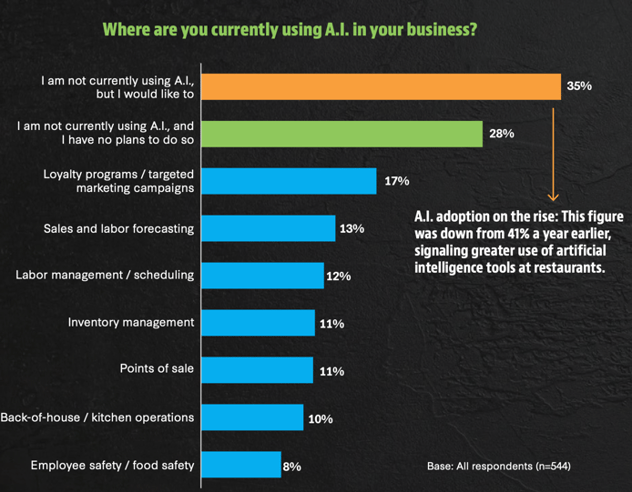
Currently, only 17% of operators use AI for loyalty. Fast-casual restaurants lead at 25%, followed by quick-serve restaurants at 18% and casual dining restaurants at 16%.
Demand for AI and ML is growing because these technologies help operators act on guests' wants and behaviors. Below are four examples:
1. Intelligent Guest Segmentation
One of the biggest challenges loyalty programs have is effectively segmenting customers to create the best messaging and offers. This is where ML is great. AI data can go through large amounts of customer data, like:
-
Purchases
-
Frequency
-
Lifetime value
After doing that, it can put customers into micro-segments. That could be customers who order on Fridays at 5:30 pm or those who buy a specific drink on Tuesdays.
Now, brands can make hyper-personalized campaigns. A city professional cluster might get happy hour rewards. Suburban families could get kid-friendly offers.
The possibilities go further when adding in location data. AI can see when high-value guests are nearby during non-peak hours and send mobile push notifications. For loyalty members in long lines, surprise offers for future redemption could improve the experience.
By using ML to make customer clusters, operators can improve loyalty communication.
2. Churn Analytics
Another way to use AI and ML for loyalty programs is to use predictive data to spot customers who might leave before they do. These models can be trained to spot changes in individual purchasing and engagement.
By finding lapsing behavior, operators can begin 1:1 win-back campaigns to keep their loyalty members. If a guest who used to visit twice a month goes four or five weeks without a transaction, AI can send a personal offer.
3. Better Responses
Online reviews and social media are everywhere. Brands are pressured to provide personal responses to customer feedback. But making personal replies isn't realistic as volumes increase. This is where AI is useful.
AI can make personal responses to thousands of comments. Whether it's saying sorry for a negative experience or sending a gift in response to a comment praising you, AI can do it all in a personal way.
AI conversations have been shown to boost guest happiness. Loyal customers feel heard, while at-risk guests get needed attention.
4. Better Guest Experiences
Upselling and cross-selling help make more money, but making the perfect recommendations for guests is challenging. ML can help by customizing menus. AI models can look at each guest's order history and suggest items they will like the most.
For loyalty programs, this means more ways to show members-only menus or bonus points for trying new items. According to eMarketer, 53.9% of consumers say brand recommendations make them feel known.
New tech is making it possible to spot guests upon arrival, using tools like license plate recognition and geofencing. Operators can see when a member enters or pulls into the drive-thru. That member can now get a personal greeting with their rewards balance on the ordering screen.
This keeps guests coming back.
The Paytronix AI Advantage
Paytronix is the leader in helping restaurant and convenience store brands use AI for loyalty program performance:
- Uno Pizzeria & Grill's guests are 2x more likely to accept AI product recommendations, lifting average monthly online orders by $125. Automated feedback responses are driving a 29% increase in future orders.
- Primanti Bros. increased frequency by 90% and spend by 50% using AI to give lapsed guests win-back offers. The brand saw a big return on its campaign investment.
- Smashburger saw a 20% increase in spend and a 16% boost in visits by using AI for loyalty program micro-segmentation. Personal offers delivered a 61x ROI.
Investing in customer data, analytics, and AI is the future of loyalty programs that work. Using these tools helps operators:
Using data and AI is a must if brands want to stay competitive.
To learn more about how Paytronix can improve your loyalty program, download our loyalty development guides for restaurants or convenience stores, or contact us today.

 Julia Bigwood




 Michelle Casey : May 31, 2024