
 Julia Bigwood
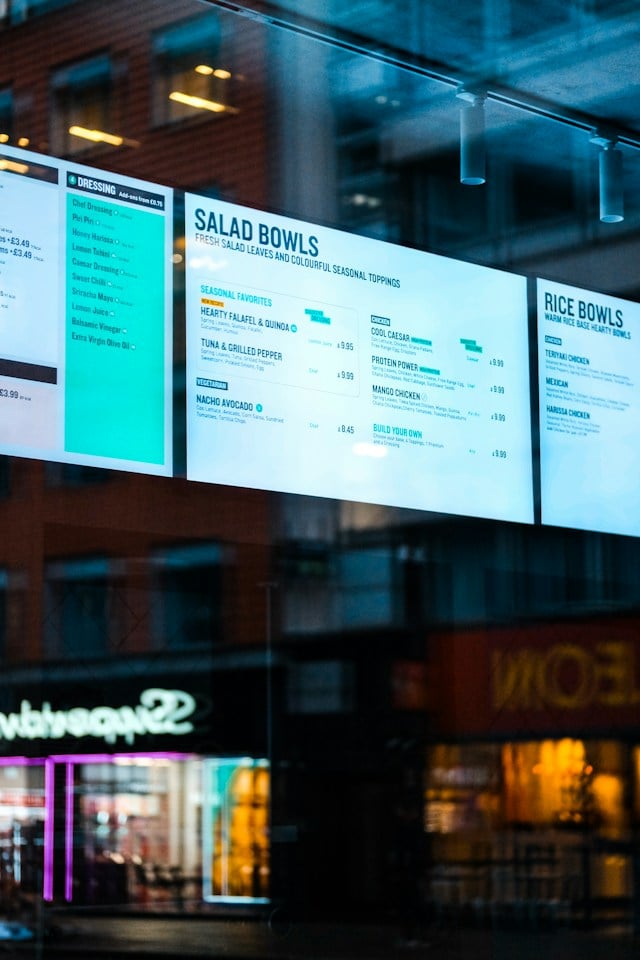
TL;DR: A menu template with pictures can influence what guests order when the images are used selectively and the layout remains clear. Read on to learn which dishes deserve the limited photo space, how to prepare each image for its final format, and why live ordering makes the results easier to measure.
- Why it matters: Food photos can influence what guests order, while crowded layouts or poorly prepared images can undermine the menu.
- Who this is for: Restaurant owners and operators introducing photos or replacing inconsistent imagery across print and digital menus.
- Who can skip this: Operators planning a text-only menu or teams with an established photography and production workflow.
- What you’ll walk away with: The criteria for choosing a suitable template and focusing your photography budget, along with the specifications needed to prepare each image correctly.
- Best next step to take: Use margin and order data to shortlist dishes for your first photo rollout, then monitor their performance before expanding.
The right menu with pictures template lets you add food photography without redesigning your entire restaurant menu. Guests may order dishes with photos up to 30% more often, making the layout part of how you sell each dish. For operators, this creates an opportunity to promote profitable items without overhauling the entire menu.
This guide is for restaurant operators adding photos for the first time or improving an inconsistent visual menu. It covers the practical decisions behind using those images in print and digital formats, from choosing a photo-ready template to preparing images that display correctly across different formats.
Why a Menu With Pictures Outperforms a Text-Only Menu
The increase in order frequency comes partly from reducing uncertainty. A strong photo helps guests understand what to expect before ordering, particularly when a dish is unfamiliar.
An image-focused layout can also hold attention and guide guests toward items that deserve greater visibility. Used selectively, photography makes the menu a more effective merchandising tool.
For digital ordering menus, operators can also track whether photographed items receive more orders and whether changes in the menu's presentation coincide with higher average order values. This gives operators a practical way to evaluate the commercial impact of their food photography.
How to Choose a Menu With Pictures Template
Start with where the finished menu will appear, then choose a menu template built for that format. Beyond its overall style, check how well the layout handles the practical details:
- Ready-made photo frames: Look for image placeholders already positioned within the layout. You should be able to replace a sample image without manually resizing the surrounding content.
- Consistent image sizing: Repeated frame dimensions give each section a deliberate, cohesive appearance. A larger hero image should only appear where the emphasis is intentional.
- Enough room for text: Test the template using your longest item name and description. The price should remain easy to find without crowding the photo.
- The correct output format: Choose PDF export for print. For digital use, select a layout that matches your menu board or a mobile-first format for QR-code menus and online ordering.
Before committing to a template, customize one section with your actual food photos, descriptions, and prices. This will reveal whether the layout works for your menu before you spend time editing the entire design.
Which Menu Items Should Get Photos?
Choose items with a clear commercial reason for greater visibility. Base that decision on contribution margin and order data rather than personal preference.
- Start with Stars. These dishes combine strong margins with high popularity. A strong image helps keep proven sellers visible.
- Feature limited-time and seasonal items. A current photo helps a temporary dish stand out and shows guests what has changed.
- Test Puzzles. These items have healthy margins but sell below expectations. Photography may help when the dish is unfamiliar or difficult to picture, but review its description and price if demand remains low.
Avoid giving every dish a photo by default. Too many competing images weaken the emphasis and can make the menu harder to scan, so begin with priority items and review changes in the order mix before expanding.

Food Photography Requirements for Print Menus With Pictures
High-resolution images help the printed menu reflect the quality and detail of each dish. A photo that looks sharp on screen may still reproduce poorly once enlarged, so check these requirements before sending the menu to your printer:
- Resolution: Aim for 300 pixels per inch (PPI) at the intended print size, often described as 300 DPI. A 4-by-4-inch photo therefore needs at least 1,200 x 1,200 pixels.
- Colour: Keep the working image in RGB until editing is complete. Ask your printer whether the final file should be converted to a specific CMYK profile.
- File type: Use TIFF when the printer requests a lossless source. A high-quality JPG is more compact and often sufficient for menu photography.
- Visual consistency: Use the same lighting direction and background treatment across the set. Any garnish shown should match how the dish is served.
Food Photography Requirements for Digital Menus With Pictures
Digital menus use pixel dimensions, so prepare each photo for the space it will occupy on screen. Follow the platform’s upload specifications where available, then check the following:
- Dimensions: Upload the image at least as large as it will appear. For digital boards, follow the image dimensions required by your content system.
- File size and format: Compress each photo without introducing visible quality loss. Where practical, aim for files below 1 MB to help reduce mobile loading times. High-quality JPG is widely supported, while WebP can provide smaller files when the platform accepts it. PNG is another option, particularly when transparency is required.
- Color: Export images in sRGB for more predictable color across screens.
- Aspect ratio: Crop each photo to match its image frame before uploading it. A horizontal photo placed in a square frame may lose important parts of the dish.
Large files can slow down QR-code and web menus on mobile connections, so test the finished menu away from your venue’s Wi-Fi. Check that images load quickly and remain clear on smaller smartphone screens before publishing.
Best Platforms for Menu With Pictures Templates
Menu design software such as Canva and Adobe Express lets you create downloadable menus, while an online ordering builder publishes the menu directly within the ordering experience.
- Canva: Canva’s free menu maker offers customizable restaurant menu templates with a drag-and-drop editor. Its free tier makes it an accessible starting point for operators without dedicated design software. You can upload your food photos and logo, then download the finished menu as a print-ready PDF or digital image, including PNG.
- Adobe Express: Adobe Express restaurant menu templates can be edited or used as a starting point for a new design. This flexibility suits operators who want to change the photo placement or move further away from a template’s original layout, rather than working entirely within pre-positioned image frames.
- Online Ordering Menu Builder: A native builder such as Paytronix Order Experience Builder places the visual menu inside the live ordering platform. It supports custom layouts and seasonal graphics and lets operators update menus in real time through the same system.
Visual Menu Template for Online Ordering
An online ordering menu places each food photo close to the purchase decision. Guests can view a dish and add it to their cart within the same ordering flow, allowing you to compare order patterns before and after new imagery goes live.
When guests order through linked accounts, the platform can connect their purchases to their customer profiles. Paytronix combines online ordering with customer insights, giving the live menu a measurable commercial role and helping future marketing reflect actual purchasing behavior.
For example, an operator could introduce photography for several high-margin dishes, track their order frequency over the following weeks, and compare the results against previous sales data. This helps determine which images are influencing purchasing decisions and where further investment in food photography may be worthwhile.

Frequently Asked Questions About Menus With Pictures Templates
Adding photography to a menu usually raises a few questions before the design is ready. Here are the details operators most often need to confirm.
What Size Should Photos Be on a Restaurant Menu?
The right photo size depends on where the menu will appear. For print, use 300 PPI at the final size, so a 4-by-4-inch image needs 1,200 x 1,200 pixels. For QR and web menus, follow the platform’s dimensions and compress each image without visible quality loss; for digital boards, follow the content system's image requirements, which may differ from the screen's native resolution of 1,920 x 1,080 pixels for Full HD.
Do I Need Professional Photos for My Menu?
No, a modern smartphone can produce menu-ready photos when you use soft window light and a clean, neutral background. A professional shoot can deliver more consistent results and may be worth the cost for your most profitable dishes, particularly when the images will also support online ordering and marketing.
Make Your Menu's Best Feature Work Harder
Once your images are ready, place them in a menu guests can order from directly. Request a Paytronix demo to see how Paytronix can present them within a live online ordering experience.