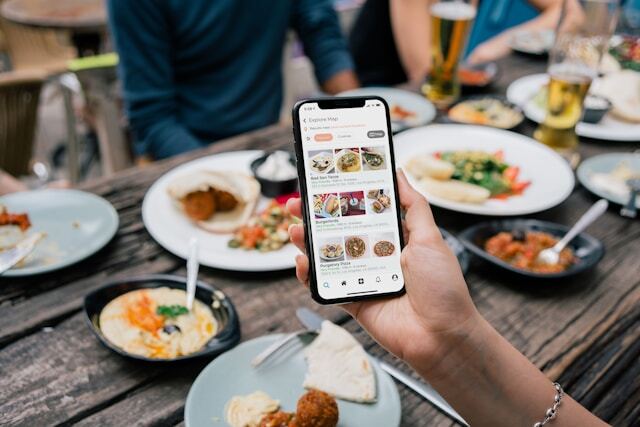
Using a foods delivery app doesn't guarantee orders. Conversion depends on the right features.
With thousands of local restaurants competing for the same customers, the difference between a browser and a buyer often comes down to how well you've optimized your presence.
With this in mind, we want to cover the specific foods delivery app features that move the needle for restaurants like yours, so you can stop leaving orders on the table.
Why App Features Matter More Than App Presence
Showing up on a platform is step one. Turning browsers into buyers is the real challenge.
The Conversion Gap Between Listed and Optimized Restaurants
Two restaurants can list the same cuisine in the same neighborhood and see wildly different results. Top-performing restaurants treat their app profiles as active sales tools by refining menus, visuals, and promotions. Lower performers treat listings as a " set-it-and-forget-it" task.
Every small improvement compounds: better photos lift click-throughs, cleaner digital menu structures increase average order value, and smart promotions drive repeat customers.
What is the Best App for Ordering Food? It Depends on Features
Every category has a different platform leader. DoorDash wins for delivery coverage. Grubhub is strong in loyalty and corporate dining . Uber Eats excels in urban markets.
The right platform for your restaurant depends on which features align with your service model and customer base. Equally important, multi-platform restaurants need to optimize for each app rather than copy and paste the same profile across them all.
Menu and Listing Features on Apps for Restaurant Delivery
The way your menu looks and reads usually determines the number of orders you collect on foods delivery apps. If it looks and reads well, you'll have a chance to outsell your competitors.
Photography and Visual Presentation That Converts
Professional food photography impacts order rates. After all, customers eat with their eyes first, especially when they view meals on a screen and can't smell the kitchen. As such, high-resolution images with accurate color and good lighting outperform smartphone snapshots.
Each platform has unique image requirements. Ignoring them can result in blurry or cropped photos that undermine trust before customers even read your descriptions.
Menu Structure on the Best Food Ordering Websites
Category organization shapes ordering behavior Logical groupings help customers navigate your menu, and the strategic placement of high-margin items increases their visibility.
Item descriptions should set expectations, highlight preparation methods, and suggest add-ons in a natural way. Pricing presentation matters too. Round numbers tend to feel more premium, while charm pricing works better for value-focused meals.
Which Food Delivery App is the Most Popular for Menu Discovery
Customers discover restaurants differently on each platform. Some apps prioritize ratings in search rankings. Others focus on sponsored placements or delivery speed.
Featured placements and promotional slots can accelerate discovery, especially for new listings competing against established restaurants with many reviews.
Ordering Experience Features on the Best Online Food Delivery App
It doesn't matter which foods delivery app your restaurant is on. Friction kills conversions. To achieve the best results, limit the number of steps between a guest's craving and checkout.
Streamlined Checkout on the Best App to Order Food Online
Saved payment methods, remembered delivery addresses, and one-tap reordering reduce the effort it takes customers to place their order. Extra steps at checkout increase dropout risk.
Guest checkout options matter, too. Forcing customers to create accounts before they order delicious food pushes first-time customers away before you win them over.
Customization Options That Increase Order Value
Modifier and add-on prompts, when placed at the right moment in the ordering flow, increase average order value. For example, suggested pairings work well for beverages and sides.
At the same time, special instructions fields let customers take control of their meals, which reduces refund requests and improves satisfaction. For many customers, the perfect meal is one they helped create without having to cook themselves.
Real-Time Updates on Top-Rated Food Delivery App Platforms
Order tracking and delivery status notifications reduce anxiety and support calls.
When customers know exactly where their food is and when it will arrive at their door, they're more patient and more likely to reorder. In other words, accurate delivery times, not overly optimistic ones, build the kind of trust that turns one-time buyers into regulars.
Promotional Features on the Best Fast Food Delivery Apps
Promotions attract new customers and re-engage lapsed ones. The key to success is structuring your best offers so they generate new orders without killing your margins.
Discounts and Deals on the Most Popular Food Ordering Apps
Percentage-off promotions, free delivery thresholds, and limited-time deals convert at different rates depending on your price point, cuisine, and target market.
Lunch promotions on weekdays, family meal deals on weekends, and late-night specials during off-peak hours can fill capacity without cannibalizing full-price orders.
The goal is incremental revenue, not discounted revenue you would have earned anyway.
Loyalty Programs on Premium Food Delivery App Platforms
Platform loyalty programs give customers a reason to choose your restaurant over a competitor.
Restaurants that participate in loyalty programs tend to convert one-time orderers into repeat customers at higher rates. In addition, restaurant-specific rewards, where available, strengthen the connection customers have to your brand rather than the platform they order from.
Featured Placement on the Number 1 Food Delivery App
If you understand the math, you can generate meaningful ROI with sponsored listings.
To achieve high organic rankings, however, you also need to pay close attention to your restaurant's ratings, review volume, order accuracy, and completion rate.
The establishments that invest in both paid visibility and organic credibility hold their position more consistently than those who rely on one or the other.
Speed and Reliability Features That Build Trust
Customers who receive incorrect orders, or correct orders long after the expected time, usually won't order again. Worse, they'll leave bad reviews so others don't order either.
Because of this, speed and accuracy are conversion features, not just operational ones.
Delivery Time Estimates on the Best Online Food Order App
Accurate time estimates set realistic expectations.
Underestimate delivery times and you'll disappoint customers when orders run late. Overestimate delivery times and you may lose customers before they check out.
That said, you should build in buffer time during peak hours and explain delays clearly when needed. Doing so is better than promising speed you can't deliver.
What is the Fastest Food Delivery Service? Speed Features That Matter
If possible, offer customers express, priority, and other delivery options.
Also, make sure your kitchen ordering system integrates with the app platforms you use. That way, orders route to kitchen display systems without manual entry. This workflow reduces errors and shaves minutes off prep time, leading to a more efficient process.
Lastly, use driver assignment protocols and routing algorithms to ensure your kitchen operations are tight and fast. Every minute saved compounds across dozens of orders per night.
Order Accuracy on the Best Restaurant Delivery Apps
To protect your ratings on each food delivery app, use confirmation prompts, clear communication about unavailable items, and smooth refund processes. Customers are as likely to judge your restaurant by how it handles mistakes as by how often those mistakes occur.
Customer Engagement Features on Top Food Ordering Apps
True customer engagement extends beyond the order. The way foods delivery apps connect you with customers before and after delivery shapes your long-term conversion rate.
Reviews and Ratings on Top Delivery Food Apps
Ratings influence click-through rates on top food ordering apps. Responding to both positive and negative reviews signals that your restaurant takes feedback seriously.
Building review volume requires consistent effort. However, you can speed up the process by asking customers to review your business. Some platforms allow post-order prompts that encourage satisfied diners to leave feedback.
Personalization on the Best Food Delivery App in my Area
Custom recommendations based on order history increase reorder rates.
When the app suggests a customer's usual order or highlights a new item matching their preferences, it reduces decision fatigue and speeds up checkout.
In the same vein, personalized promotions outperform generic offers because they feel relevant rather than random. Relevant offers get purchased while random offers get ignored.
Communication Features on All-in-One Delivery App Platforms
In-app messaging, delivery driver communication, and post-order follow-up reduce friction when something goes wrong. Customers who can reach support quickly report higher satisfaction, even after a problem. Post-delivery feedback loops give restaurants data they can act on.
Comparing Features Across Restaurant Delivery Platform Options
No two platforms are the same, and the differences matter for conversion optimization.
Delivery Services Like Grubhub: Feature Comparison
Grubhub offers restaurant partners analytics dashboards, loyalty integration, and access to Grubhub+ subscribers who place more orders and spend more per order.
In addition, Grubhub's restaurant partner tools give operators visibility into conversion data and customer behavior that many other platforms can't match.
Understanding what each platform offers restaurant operators will help you invest your time and money where it is most likely to make an impact.
What Delivery App is the Best for Your Restaurant Type
Fast-casual restaurants benefit from high-volume platforms with quick checkout flows.
Fine dining restaurants benefit from platforms where customers browse deliberately, and where photography and item descriptions carry more weight.
Keep in mind, regional apps sometimes dominate specific markets even when national apps have bigger name recognition. In the end, matching your restaurant type to platform strengths is more effective than trying to optimize across all of them.
Which Food Delivery App is Better for Conversion Optimization
Each platform offers different levers: DoorDash's DashPass subscribers, Grubhub's loyalty ecosystem, Uber Eats' promotion tools. The platform worth prioritizing depends on where your current customers are concentrated and where you have the most room to grow.
Pickup and Alternative Fulfillment Features
Pickup and takeout orders cost less to fulfil and, done well, convert browsers into regulars.
Digging deeper, curbside and in-store pickup options remove delivery fees. This small benefit is often enough to convert price-sensitive buyers into happy customers.
We should also talk about pickup-specific promotions, which offer a small discount to customers when they choose pickup over delivery options. These promotions can shift order mix in ways that protect margins. Finally, order-ahead and scheduling features let customers plan meals in advance, which increases completion rates and reduces last-minute cancellations.
In urban markets, customers often choose pickup for speed. In suburban markets, delivery tends to dominate. By supporting both channels, you give customers access to the widest possible demand without forcing them to choose one or the other.
Technology and Integration Features
The operational backbone of your app presence determines how efficiently you can scale.
For example, POS integration , kitchen display system sync, and menu management tools reduce hard work and errors. When you combine these growth tools into an all-in-one delivery app integration approach, one in which orders from multiple platforms flow into a single system, it will be easier for you and your team to manage orders and drive revenue.
Also worth mentioning, analytics dashboards show you where conversions come from and where customers drop off. Restaurants with this data outperform those without it.
For multi-unit operators, centralized menu management and location-specific optimization capabilities are non-negotiable. Without these features, teams have to update items by hand across locations, which increases errors and slows down menu changes.
Choosing the Right Features for Your Restaurant
Start with an honest look at where your conversions break down.
Are you experiencing low average order value? Focus on modifier prompts and upsell suggestions. What about low repeat order rate? Prioritize loyalty and personalization. Low discovery? Invest in sponsored placement and review volume.
Premium features are worth the investment for certain restaurants. After all, conversion rate improvements compound over time, and a small lift in the percentage of menu viewers who complete an order adds up to significant revenue across a full year.
Build a roadmap ranked by impact on your specific metrics and execute from there.
Frequently Asked Questions About Food Delivery Apps
Here are quick answers to the most common questions we see about food delivery platforms.
What is the best food delivery app to use?
It depends on your location and priorities. DoorDash has the widest coverage, Uber Eats excels in cities, and Grubhub offers strong loyalty features. Compare your options based on your specific market to find the foods delivery app that's best for your unique establishment.
Who else delivers besides DoorDash?
Uber Eats, Grubhub, Instacart, and many regional platforms offer food delivery. Additionally, most restaurants offer direct delivery through their own websites, often powered by Paytronix.
Which food delivery app is the most profitable?
Profitability varies by market, cuisine type, and how well you use each platform's features. Generally speaking, a first-party ordering solution, like what Paytronix offers, preserves more margin. This is because first-party ordering solutions avoid third-party commission fees.
Who is cheaper, Grubhub or DoorDash?
Pricing varies by market, promotion, and subscription status. Grubhub+ and DashPass both reduce or eliminate delivery fees for subscribers. Checking both apps for your specific order and location will give you the most accurate comparison.
What This Means for You
Foods delivery app features, from menu presentation to promotional tools to fulfillment options, often determine conversion rates, revenue, and success for restaurants.
The companies that win on delivery platforms do more than show up. They use each feature strategically to increase orders and drive customer loyalty.
Audit your current app presence against the features in this article, identify your biggest conversion gaps, and prioritize the optimizations with the clearest return.
Looking to grow your restaurant without third-party apps? Paytronix offers online ordering to help restaurants grow first-party digital sales, reduce dependence on third-party platforms, and build direct customer relationships that drive long-term profitability. Book a demo today!

 Michelle Casey


 Michelle Casey : Nov 08, 2025