
 Kristin Lynch
11 min read
Foods Delivery App Features That Instantly Improve Conversions
 Michelle Casey : Jun 18, 2026
Using a foods delivery app doesn't guarantee orders. Conversion depends on the right features.
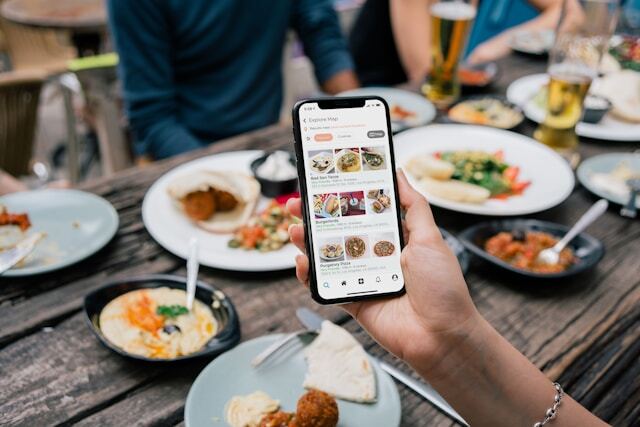
Food delivery apps expand your reach and drive order volume, but not all of them create new demand. Some move existing customers into a higher-cost channel without adding incremental orders, and that distinction is where the decision starts.
DoorDash, Uber Eats, and Grubhub dominate the market, but each one fits a different operation. Evaluating platform fit and fee structures before committing is how operators protect margin and build a delivery strategy that scales.
This article covers how to evaluate and choose among them, and how Paytronix turns third-party delivery volume into a direct guest relationship your brand controls. With commission rates of 15%–30% per order, choosing the right platform is where profitable growth starts.
At the end of a long day, diners expect to find their favorite restaurants on the same apps they already use for other services. Delivery and takeout now account for a significant share of total restaurant revenue.
According to the National Restaurant Association's report, 37% of adults order restaurant delivery at least once a week, and nearly 75% of all restaurant traffic now happens off-premises
Restaurants that aren't visible on the platforms customers already use miss high-intent ordering moments and give competitors more room to capture that demand. A guest deciding what to order at 6:30 p.m. on a Thursday isn't browsing, they're ready to buy.
A strong app for food delivery puts your restaurant in front of millions of new customers every day. For example, a small business owner on your block orders dinner every Tuesday, even though they have never walked through your door.
Check valid ZIP code coverage before committing, because knowing where each platform leads in your market is how you decide where your effort pays off. The goal is real order volume, not mere brand presence on an app your customers rarely open.
Most food delivery apps are free to download, and any app for ordering food online worth evaluating lets operators compare coverage through their websites before signing anything. Taking time to compare coverage, local demand, and fee structures upfront can prevent a costly mismatch later.
Local restaurants face fewer options when it comes to controlling an order's delivery fee. Service charges combined often exceed $9 on a single transaction, and you pay the commission regardless.
Model the true cost at your actual ticket size: On a $22 order at 30% commission, you're left with $15.40 before packaging and labor. That everyday math is where operators get surprised.
Grubhub, founded in Chicago in 2004, connects restaurant, convenience, and grocery partners with customers across more than 4,000 United States cities through its end-to-end software platform. With over 375,000 partners, its best-in-class technology reduces order friction, and the Grubhub Guarantee ensures food arrives perfectly.
Here are some key benefits for restaurant partners:
A dedicated Rewards tab that makes it easy to find promotional offers from nearby and national restaurants, helping customers save money on every order
Grubhub+ members enjoy exclusive savings, including $0 delivery fees on eligible orders for around $9.99 per month
Upfront fee visibility before checkout reduces cart abandonment
24/7 customer support when orders go wrong
In suburban areas, Grubhub's combined fees average around $6.99 per order, lower than competing platforms. Its strongest position is in the Northeast, Midwest, and corporate lunch segments.
DoorDash dominates U.S. restaurant delivery at 67% market share with nearly 590,000 restaurant and retail partners nationwide. When operators ask which delivery apps in my area lead customer behavior, DoorDash is the answer in most markets.
What sets it apart:
DashPass subscribers order frequently and spend more per visit, making them your highest-value delivery customers
Advance scheduling captures planned occasions and lets you run targeted deals by mealtime
Urban delivery averages 16 minutes, with aggressive suburban coverage
Beyond food, DoorDash lets customers purchase beauty products, pet supplies, laundry detergent, groceries, and other services alongside their meal
DoorDash's combined fees average around $8.99 per order in suburban areas. Operators who grow here use promotional tools to drive trial, then convert customers into repeat buyers.
The Uber Eats app operates in 45 countries and has brand recognition that no other platform matches internationally. In urban areas, its integration with the Uber rideshare app puts your restaurant in front of customers before they even arrive home.
As a food pickup app and full delivery platform, Uber Eats captures ordering intent at the right moment. With access to over 825,000 restaurant partners worldwide and 80 food categories, including halal, gluten-free, and alcohol delivery where permitted, it covers more ground than any other platform.
One trade-off: without a subscription, service fees run higher than competing platforms, which affects conversion on lower-ticket items. That makes it especially important for operators to review how fees appear at checkout and whether higher costs could reduce order frequency.
All food delivery apps aren't equal, and major platforms don't always win in every market. Seamless is Grubhub's brand in New York City, with the same platform but a different location strategy and deep penetration in corporate lunch and group ordering.
Postmates operates under the Uber umbrella in select markets, particularly Los Angeles, Las Vegas, and Phoenix. It holds strong brand recognition in the Southwest for late-night and non-meal orders.
Favor Delivery operates exclusively in Texas with a Texas hospitality approach. It has strong roots in Austin, Dallas, and Houston, often outperforming national delivery services on order quality. The main difference between regional apps like Favor and national platforms isn't always volume. It's how well they fit your specific market.
Evaluate all other apps through Google Play or the App Store before committing. Taking time to compare coverage and fee structures before signing prevents a costly mismatch.

Verify valid ZIP code coverage and check whether the platform's customer demographics align with your audience. A corporate-focused platform in a residential neighborhood is the wrong fit regardless of national numbers:
DoorDash: Stronger fit for suburban markets and raw volume. Urban delivery typically runs 10 to 15 minutes for nearby restaurants while suburban areas average 25 to 40 minutes
Uber Eats: Stronger fit for urban density and international reach
Grubhub/Seamless: Strongest in Northeast, Midwest, and corporate accounts
For nonmembers, delivery fees range from $0 to $8 per order, with service fees between 5% and 15% on top. Every dollar lost to fees is a dollar that never reaches your bank account.
Operators who complete a full cost analysis before signing save money and protect margins from day one. Order volume gives you negotiating leverage, but only if you ask.
The key question is whether the platform is creating new demand or moving existing customers into a more expensive channel.
Evaluate each online food ordering application on menu management flexibility, order accuracy tools, and analytics depth. The right order app does more than list your menu. It confirms the correct address before dispatch, flags issues in real time, and gives you access to data you can act on.
When evaluating any app for online food delivery, check how it routes ordering apps into your kitchen queue and whether it reduces errors during peak hours. The right choice protects your ratings as much as your kitchen flow.
The apps guests browse daily are storefronts, and restaurants typically underinvest in theirs. Menu photography converts browsers into buyers.
Lead with your best offers: Your signature pizza, standout burgers with extra pickles, the delicious items people choose you for. Customers decide in under two seconds on any food order online app.
Delivery pricing needs its own strategy. What you charge in the dining room doesn't translate to a platform with a 30% commission baked in, and protecting cash flow starts before you go live.
Capture the customer's email address with every transaction. That contact is the start of a direct channel no third party owns.
Many platforms offer promotional discounts like percentage off orders or buy-one, get-one-free deals that reduce the total cost for the customer and drive trial for your restaurant. Before any food delivery app buy decision, evaluate what promotional tools come included versus what costs extra.
Timing matters as much as the offer itself. Promotions launched on Thursday and Friday capture weekend planning intent while Monday discounts recover the slowest traffic day. Run your highest-value promotion when the platform's own traffic is highest, not when your dining room is already full.
Reward repeat behavior over first-time trial. Customers often use a takeout app only once, and you only turn that volume into long-term revenue when you build your strategy around earning the second order, not celebrating the first.
When someone uses an eat delivery app for the first time, they're a platform customer first and your customer second. Respond to reviews consistently because ratings drive placement and placement drives orders that cost you nothing in marketing.
Paytronix integrates with delivery operations to identify which app customers to convert to your direct channel. It moves new customers from one-off third-party transactions buried in someone else's inbox, or your spam folder, into a relationship inside your own ecosystem.
For any restaurant’s food delivery app setup to work, the kitchen has to adapt. Delivering a perfect meal starts with timing, packaging, and quality standards built for off-premises orders.
Meals arriving at the right temperature and presentation drive five-star ratings and a consistent customer experience. A centralized system that lets you streamline operations and route all order apps into one queue protects kitchen flow at peak hours.
Every delivery order puts your reputation in someone else’s hands. The customer may blame the restaurant for late arrivals, missing items, cold food, or poor handoff experiences, even when the issue happens after the order leaves your kitchen.
That is why operators should evaluate the last-mile experience before committing to a platform. Look at what each driver app provides delivery drivers: route clarity, support access, and tip structure before committing to a platform. Platforms that pay drivers weekly and structure tips fairly attract better couriers, and better couriers take better care of each order.
Reliable service order delivery is not just an operational detail. It affects reviews, repeat orders, and whether customers trust your restaurant enough to order again.
|
Platform |
U.S. Market Share |
Typical Commission |
Strengths |
|
DoorDash |
67% |
15%–30% |
Suburban reach, volume, advance ordering |
|
Uber Eats |
23% |
15%–30% |
Urban markets, international reach, rideshare integration |
|
Grubhub/Seamless |
16% |
5%–30% |
Corporate ordering, customer data, flexible commissions |
|
Postmates (via Uber) |
Varies |
15%–30% |
Southwest markets, late-night, brand recognition |
Menu price markups add another layer: Postmates averages 92%, DoorDash 83%, Grubhub 80%, and Uber Eats 69%. Understanding the full picture gives operators a clearer view of where their delivery services investment makes sense.
Sponsored listings and search placement are the primary marketing and discovery tools the major platforms offer restaurant partners. These tools can improve visibility, but they should be used with a clear return-on-investment goal, because more impressions do not automatically mean better profit.
Custom recommendations powered by artificial intelligence (AI) surface your restaurant based on individual user behavior, not proximity alone. That makes menu data, item names, photography, ratings, and fulfillment consistency more important.
Loyalty program integrations connect delivery orders to your broader guest strategy, turning transactions into relationships inside your own ecosystem. That access to guest data is not available through third-party platforms on their own .
Ghost kitchens are no longer an experiment. This new delivery app landscape makes it possible to run multiple virtual brands from a single kitchen, test concepts with a flexible schedule, and scale without extra location overhead.
The global cloud kitchen market reaches $91.7 billion in 2026, and AI-powered personalization is now standard across every major online food delivery application. These growth tools surface your restaurant based on past behavior, time of day, and location, with features like Nutritional Matches and Dynamic Offers tailored to individual user habits.
Commission-free models are gaining real traction, and operators who build direct channels now face less exposure when third-party commissions rise. The shift is already underway, and the window to act is narrowing.
Direct ordering integration is where that advantage becomes operational. When your loyalty program, your app, and your third-party delivery presence share the same guest data, you stop losing customers between channels and can connect delivery activity to loyalty, customer data, and personalized marketing.
Paytronix connects those touchpoints. With the right strategy, a guest who finds you on DoorDash today can be ordering directly through your own app next month, at a cost that stays with your business instead of leaving with the platform.
DoorDash leads in suburban volume, Uber Eats in urban and international markets, and Grubhub in the Northeast and corporate accounts. The right fit depends on your market, ticket size, and whether each platform's commission structure lets you expect a real return on investment (ROI).
Uber Eats is DoorDash’s biggest competitor, with 23% U.S. market share compared to DoorDash’s 67%. Grubhub follows at 16%, with its strongest position in the Northeast, Midwest, and corporate dining segments.
There is no fixed answer. Grubhub offers more customer data visibility and commission flexibility, which operators can use to save money over time. DoorDash delivers higher raw volume across U.S. markets, which may justify the cost for high-traffic locations.
Uber Eats and Grubhub are the two major alternatives, with delivery services covering most U.S. markets and dozens of food categories. Postmates serves select Southwest markets under Uber, Seamless covers New York City, and regional apps like Favor fill gaps where national platforms underperform.
The right food delivery apps, when strategically selected and optimized, boost restaurant orders and expand your reach beyond your dining room. But growth is only valuable when it supports profitability. Audit your current platforms: Which apps drive incremental orders, and which cannibalize existing business?
The operators who grow aren't chasing volume on every platform. They increase orders through the right channels, build a balanced delivery channel strategy, and use Paytronix to turn third-party volume into direct guest relationships, from loyalty program mechanics to real-time guest data, so they can use delivery platforms for discovery while building channels they control.
Book a demo to see how top operators build delivery strategies that protect margins and drive long-term growth. Download the Online Ordering Report to see how leading brands are navigating the shift from platform dependency to direct channel ownership.
11 min read
Michelle Casey : Jun 18, 2026
Using a foods delivery app doesn't guarantee orders. Conversion depends on the right features.
5 min read
 Kristin Lynch : Dec 26, 2019
Ah, New Year’s Eve. The night that looms large with visions of popping champagne corks, revelry, and lots of friends. Of course, that vision isn’t...
9 min read
 Julia Bigwood : Jun 12, 2026
A 15-minute wait to place an order is the difference between a guest who returns and one who walks out before the appetizer hits the table.