
 Julia Bigwood
6 min read
Service Area in a Restaurant: What It Is and Why It Matters
Most service bottlenecks aren’t staffing issues; they’re design issues you haven’t fixed yet. Whencustomers pile up at the entrance, stand too long...
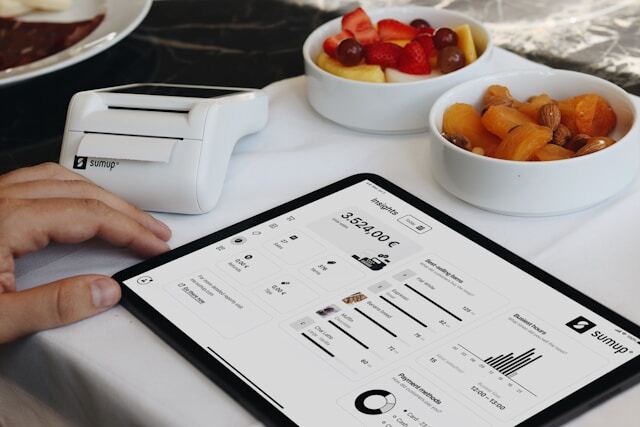
A quick service restaurant (QSR) handling 300+ transactions a day can't afford software that hesitates for 15 seconds at the register. That kind of delay can mean two cars per hour leave the line during a peak shift. Across the restaurant industry, average drive-thru service time at major QSR brands now sits between 4 and 6 minutes, according to QSR Magazine's 2025 Drive-Thru Study with Intouch Insight.
For QSR operators and franchisees, that math turns software selection into an operational decision. This article covers nine quick service restaurant software tools that improve throughput, service speed, ticket size, and labor efficiency.
QSR operators need software that supports speed, scale, and zero tolerance for downtime, three requirements that most full-service restaurant tools, which focus on table and seat management, never face.
A quick service POS system has to process hundreds of transactions an hour without lag, route orders to multiple stations through a kitchen display system, and stay live across every channel: counter, drive-thru, kiosk, and mobile.
That sets a higher bar than fast-casual concepts, food trucks, or sit-down operations need. QSR technology has to keep up with fast-paced restaurant environments where one slow transaction ripples through the whole queue.
The nine tools below deliver the industry-specific capabilities that quick serve restaurants need to boost efficiency, lift customer satisfaction, and strengthen the overall guest experience.
The quick serve point-of-sale system is the foundation everything else connects to. A quick service restaurant POS system needs large image-based menu tiles for fast order entry, an intuitive interface, payment terminals that handle tap, chip, and mobile pay, and seamless integration with drive-thru lane management.
Key features in a modern QSR point-of-sale system include menu customization across dayparts, hardware bundles configured for high-volume throughput, and the processing power to handle peak demand without lag.
The best POS system for QSR also unifies in-person, drive-thru, kiosk, and online ordering into one data stream, with real-time reporting on sales data.
Pair the quick service restaurant software with a strong restaurant POS system foundation, reliable POS hardware, offline mode for connectivity drops, custom pricing options, and receipt printers that don't bottleneck the line.

Drive-thru order management software shows orders at the speaker, displays confirmation back to the guest, tracks timing data per vehicle, and routes items to the right kitchen station. The goal is to cut every second of dwell time without sacrificing order accuracy.
AI-enabled drive-thru lanes are already moving the needle. The same QSR Magazine study found AI-assisted ordering shaved service time to 3:53 compared with a 4:15 average, a major difference at peak.
Modern POS systems with order prediction AI also boost service speed and upsell attachment rates, streamlining service and helping operators streamline operations during peak.
QSR kiosk software handles self-service ordering with large product images, minimal taps, clear modifier flow, and loyalty enrollment built into the order path. The interface needs the same image-led design as the counter POS. Guests should never have to read more than they tap.
The financial case is strong. Industry data shows kiosks lift average ticket size by 15–30% through systematic upselling, with Tillster research finding a 20% average increase in order values. They can also reduce front-counter pressure by shifting routine ordering work to self-service, which helps staff focus on fulfillment and guest issues.
For a deeper look at self-service restaurant tools and software features, we've broken down the full feature set separately.
QSR digital ordering, including your branded mobile app, online ordering platforms, and connected digital tools, is where the highest-value tickets live, because app and order-ahead guests often build larger baskets before they reach the restaurant.
Mobile ordering supports order-ahead for pickup or drive-thru, mobile payment with instant transfers, loyalty point earning, and push notification campaigns that bring guests back without paid acquisition.
The Paytronix mobile app and digital ordering layer also centralizes third-party delivery apps and delivery services into one interface. Modern payment processors handle payment processing, credit approval, and tokenization automatically, so staff don’t have to manage five tablets or worry about card data at the pass.
A QSR loyalty program is the single highest-impact retention tool in the stack. Loyalty members visit 22% more often than non-members, according to Circana data cited by QSR Magazine, and loyalty traffic now drives more than 50% of visits at top QSRs.
QSR-specific loyalty programs need points per transaction, tiered rewards, mobile earning through app and in-store scan, and behavioral triggers, including lapsed guest campaigns, birthday offers, and seamless integration with the POS.
Customer loyalty built this way produces measurable same-store sales growth, which is why the Paytronix platform is purpose-built around it.

The kitchen display system replaces paper tickets with screens that route items to the right station, from fries to the fryer, drinks to beverages, and sandwiches to assembly, and sequence orders by ticket time. QSR kitchen management software does this at more than 200 transactions an hour without dropping orders.
A KDS connected to the drive-thru timer and the POS eliminates the paper bottleneck that limits throughput at peak. JJ Fish & Chicken's Fulton location cut customer wait times in half after switching from handwritten tickets to a digital KDS, the kind of operational efficiency that turns a slow Saturday into a profitable one.
QSR scheduling software handles the variables that make staff scheduling complex: high part-time turnover, split shifts, break compliance, and demand that shifts by daypart. Connect the scheduler to your POS sales data, and it generates rosters that match labor to transaction forecasts automatically.
The labor impact is real. Operators using automated scheduling typically pull 3–5% out of labor costs, per Fourth's HotSchedules data.
Pair scheduling with QSR inventory software and operators can also trim food costs. Managing inventory in real time keeps stock aligned with actual demand.
Marketing automation uses behavioral triggers, including lapsed guest, birthday, and nth visit, to send push notifications or emails without manual campaign setup.
Triggered campaigns typically redeem at 3–5x the rate of untargeted blasts. Paytronix's own client data shows 1:1 messaging lifts effectiveness 4–5x because it reaches the guest at the moment of relevance.
Marketing automation needs customer data flowing in from the POS, the app, and the kiosk to work. When Paytronix's loyalty program, app, and POS integration feed a unified guest database, every campaign uses real behavior and brings in more customers without raising acquisition spend.
QSR reporting software with centralized multi-location management lets operators push menu and pricing updates to all their locations from one dashboard, view same-store sales and labor performance by unit, and configure loyalty centrally.
Cloud-based technology is what makes this possible across multiple locations.
The management time savings are significant: fragmented back-office systems cost multi-unit operators 12–18 hours weekly per location in duplicate data entry, per SynergySuite, which is exactly the waste a cloud platform eliminates.
Add advanced analytics on top, including actionable insights from real-time sales data and inventory management, and operators get the visibility they need to make data-driven decisions that drive same-store growth.
The order you deploy these tools matters as much as the tools themselves. Most operators build in three layers, starting with the operational foundation and adding revenue and efficiency tools as they scale.

The best POS software for quick service restaurants is the one that handles your transaction volume without slowing down, integrates with your KDS and drive-thru system, and connects to your loyalty and digital ordering platform. Evaluate based on uptime track record, integration depth with other tools in your stack, payment processing speed and processing fees, and QSR-specific workflow design.
Yes, the data is overwhelming. Loyalty members visit 22% more often than non-members, and loyalty traffic now drives more than 50% of visits at top QSRs. At quick service transaction volume and thin margins, loyalty-driven repeat visits have an outsized impact on profitability.
It combines faster order entry, automated kitchen routing, and order prediction AI working together. Quick service restaurant technology and fast food software with image-based POS tiles cut order entry time, the KDS routes items automatically, and AI suggestions handle upsells without slowing the line.
The QSR brands pulling ahead aren't the ones with the most software. They're the ones whose software actually works together.
When the POS, KDS, kiosk, mobile app, loyalty program, and marketing automation share a single data layer across the entire business, every transaction makes the next one smarter.
Schedule a Paytronix demo to see how the mobile app, loyalty program, and marketing automation work as a complete guest engagement system purpose-built for quick service restaurant software scale.
6 min read
Most service bottlenecks aren’t staffing issues; they’re design issues you haven’t fixed yet. Whencustomers pile up at the entrance, stand too long...
4 min read
 Kristin Lynch : Jun 24, 2021
With the announcement that McDonald’s will launch its first loyalty program nationwide in July, one of the world’s top brands has indicated that...
26 min read
 Michelle Casey : May 29, 2025
For every business in the hospitality industry, competition is tough, and loyalty is no longer “nice to have.” Instead, it’s a necessity to drive...