
 Michelle Casey
39 min read
Restaurant Loyalty Program ROI: The Data You Should Know in 2027
 Julia Bigwood : Sep 09, 2026
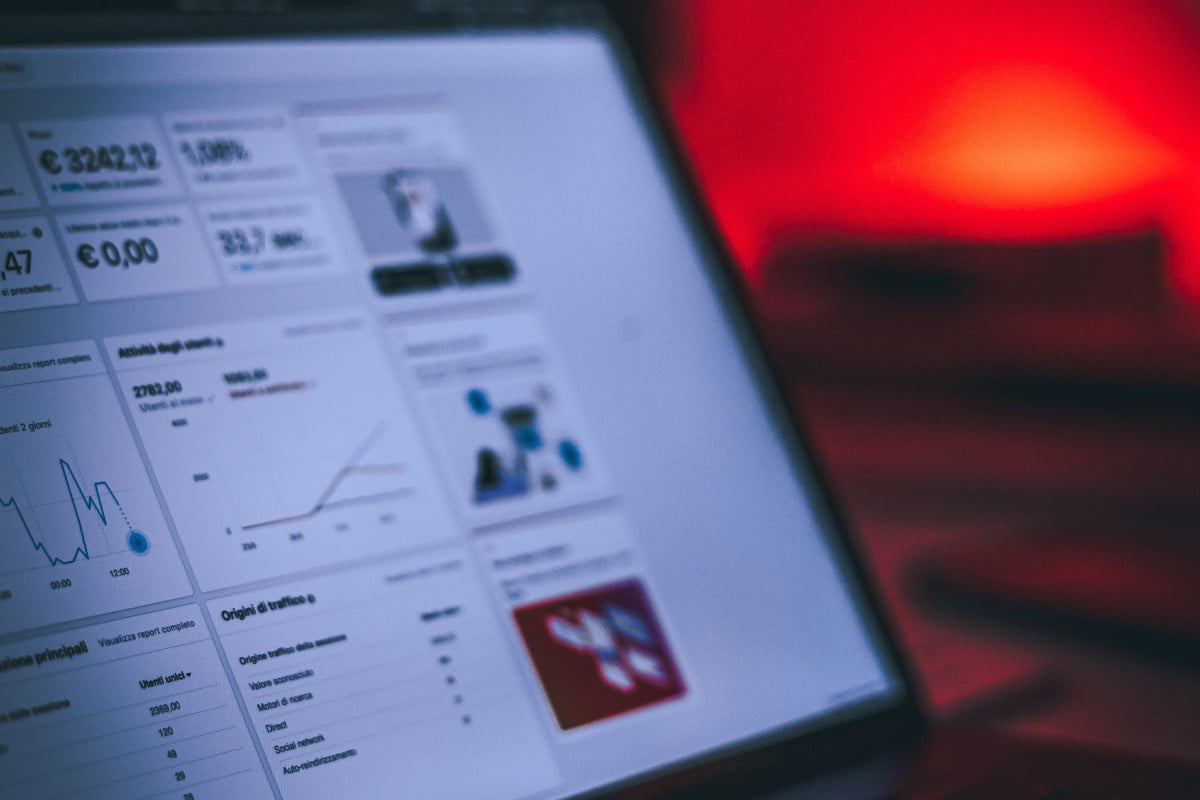
Restaurant marketing automation is the use of software to send targeted, behavior-triggered campaigns to restaurant guests automatically without manual intervention for each send. It connects guest data from your POS, online ordering system, and loyalty program to deliver the right message, through the right channel, at the right moment.
The result is personalized, consistent guest communication at a scale no marketing team can replicate manually.

Your marketing team can't write a personal message to every guest who hasn't visited in 45 days, send a birthday offer to everyone turning another year older this week, and follow up with every first-time visitor before they go somewhere else tomorrow.
There aren't enough hours. But your competitors' platforms can and do all of it, automatically, while your team is focused on other matters.
This guide explains exactly what restaurant marketing automation is, how it works inside the tech stack you already use, the seven campaigns that produce the highest ROI across restaurant formats, how automation differs by segment (QSR, fast casual, full service, and c-store) and where AI is taking it in 2026 and beyond. It also addresses what automation is not, which matters as much as understanding what it is.
Paytronix has powered marketing automation for more than 1,800 restaurant and c-store brands. Using data, Paytronix clients typically see 1:1 messaging increase campaign effectiveness by 400–500% over batch-and-blast campaigns. (Paytronix) The context and examples throughout this guide draw on that experience, including findings from the 2026 Paytronix Loyalty Report.
Restaurant marketing used to be simpler. You sent a monthly email newsletter, ran a Tuesday special, maybe sent a birthday coupon to guests who gave you their date when they signed up. That worked when the expectation was occasional contact and broad offers.
It doesn't work anymore. Guests now expect complete personalization, whether it's menu recommendations, targeted promotions, or loyalty rewards. AI-powered tools allow restaurants to deliver this level of personalization at scale, moving beyond broad segmentation to individualized experiences. (Evok Advertising)
A guest who receives the same Tuesday night promotion as every other guest in your database is not experiencing personalization. They're experiencing noise — and they're learning to ignore it.
The math behind manual marketing breaks down fast. A restaurant with 20,000 loyalty members and a marketing team of two can't segment those members by recency, frequency, spend tier, ordering channel, preferred menu category, and lapse risk, then build and send individual campaigns to each segment on any cadence that moves the needle.
Automated email performance without manual campaign monitoring generates 320% more revenue than non-automated email marketing. (Stripo) That gap is the business case for automation, stated plainly.
Stat/Source: $5.44 is the average return for every $1 spent on marketing automation across industries. Automated welcome emails from restaurants have an average open rate of 75%. (Olo)
Two developments have made marketing automation structurally more important in 2025 and 2026 than it was three years ago.
First, AI has moved from an optional layer to the operating engine inside the best platforms. The automation of the past sent the same triggered message to every guest who hit a given threshold. Today's AI-powered automation predicts which guests are approaching lapse before they cross the threshold, determines which offer is most likely to bring each individual back, selects the optimal send time per guest, and adjusts future messages based on whether the last one worked. Paytronix's Journey Builder, launched in late 2025, uses decision logic that automatically adjusts messaging based on individual engagement patterns — avoiding wasted rewards on guests who already visit frequently, while prioritizing those who need extra incentive to return. (FSR magazine)
Second, the first-party data imperative has sharpened. Third-party delivery platforms process enormous volumes of restaurant transactions while withholding guest identity data from the brands. Off-premise dining now represents 50%+ of total restaurant revenue in many markets. (Rezku Blog) A significant portion of that revenue passes through channels where the restaurant never learns who the customer is. Marketing automation built on first-party data, captured through loyalty enrollment, online ordering, and in-store POS, is the primary tool for rebuilding a direct guest relationship in this environment.
Stat/Source: 68% of CMOs and CTOs in hospitality say AI and automation are now their top investment priorities, ahead of paid media. (Malou)
A restaurant brand with effective marketing automation in place doesn't have a marketing team sending campaigns. It has a marketing team designing campaigns that run themselves.
New guests receive a welcome series within hours of their first visit. Guests approaching lapse receive a win-back offer before they're fully gone.
Birthday messages arrive with a relevant offer seven days before the date. High-value guests get VIP recognition before they feel taken for granted.
Every one of these happens automatically, every day, for every guest while the marketing team focuses on strategy, creative, and optimization. That is what operational marketing automation looks like at maturity.

Restaurant marketing automation is a software-driven system that uses behavioral data from POS, online ordering, and loyalty platforms to automatically send personalized messages to restaurant guests at defined trigger points including first visit, visit milestone, lapse threshold, birthday, and post-purchase across email, SMS, push notification, and in-app channels, without requiring manual intervention for each campaign execution.
The mechanism behind restaurant marketing automation has three components: a data source, a trigger logic layer, and a delivery engine.
The data source is the guest profile built from every transaction, interaction, and channel event recorded in your POS, loyalty program, and online ordering system. Each visit updates the profile: what they ordered, how much they spent, how they paid, whether they redeemed a reward, how long it's been since their last visit. The richer the data source, the more precisely the automation can target.
The trigger logic layer is the set of rules that defines when a message sends and to whom. Triggers can be time-based (send this message 48 hours after first purchase), behavior-based (send this message when a guest hasn't visited in 30 days), milestone-based (send this message when a guest reaches 500 points), or predictive (send this message when AI identifies this guest as lapse-risk before they actually lapse). The trigger layer is where the intelligence lives.
The delivery engine executes the send through the appropriate channel (email, SMS, push, in-app), at the optimal time for that guest, with the offer or message content calibrated to their profile. The most advanced platforms vary the content, offer value, and send time at the individual level. A guest who responds to percentage-off offers gets a different coupon than a guest who responds to free-item offers, even if both receive a "win-back" campaign.
This distinction matters as much as the definition:
It isn't a CRM. A CRM stores guest data and enables marketing teams to build and send campaigns. Marketing automation uses that data to run campaigns without team intervention. They're complementary; you need the CRM data to power the automation, but they're not the same thing. Many restaurant operators confuse having a CRM with having automation, then wonder why results are inconsistent.
It isn't a loyalty program. A loyalty program creates the incentive structure that earns and rewards guest behavior. Marketing automation is the communication engine that delivers messages about those incentives. A loyalty program without automation is a database that nobody hears from. Automation without a loyalty program is a messaging system without enough data to personalize meaningfully. The two work together.
It isn't email marketing software. A standalone email platform like Mailchimp or Klaviyo can send campaigns, including automated ones. Restaurant marketing automation at the platform level connects those emails to POS transaction data, loyalty program status, and online ordering behavior, making it genuinely behavioral rather than only time-based. The trigger is "this guest hasn't visited in 30 days," not "today is Thursday."
It isn't set-and-forget. Automation handles execution. It doesn't handle strategy, creative refreshes, offer value calibration, or performance analysis. The brands producing the best results from automation treat it as a system that requires ongoing attention, not a product you turn on and ignore.

Trigger Campaign: An automated message that sends when a specific condition is met. Examples include a guest's first purchase, a lapse threshold, a visit milestone, or a behavioral event. Trigger campaigns consistently outperform broadcast campaigns in open rate, redemption rate, and ROI.
Drip Sequence: A pre-built series of messages sent over time after a defined entry event (e.g., new member enrollment). Each message in the sequence builds on the last, moving the guest toward a specific behavior; typically a second visit, loyalty enrollment, or app download.
Behavioral Segment: A dynamically updating guest group defined by actions rather than demographics. Examples: guests who visited twice in the past 30 days, guests who have never used online ordering, guests who redeemed a birthday offer in the prior year.
Win-Back Campaign: An automated message sent to lapsed guests, typically triggered at 30, 45, or 60 days since last visit, with an offer designed to drive re-engagement. One of the highest-ROI campaign types in restaurant marketing.
Omnichannel Messaging: The delivery of coordinated messages across multiple channels (email, SMS, push notification, in-app) based on guest channel preferences and engagement history. A guest who opens emails but rarely engages with push notifications should receive different channel weighting than a guest with the opposite pattern.
A/B Testing: The practice of sending two versions of a campaign (different subject lines, offer values, send times, or creative) to subsets of the target audience, then routing the full send to the better-performing version. Critical for continuous campaign optimization.
First-Party Data: Behavioral and transactional data collected directly by the restaurant through its own POS, app, website, and loyalty program. First-party data is more accurate, more complete, and more privacy-compliant than third-party data and it belongs to the brand, not a vendor.
Campaign Lift: The measurable increase in guest behavior (visits, spend, order frequency) attributable specifically to a campaign, isolated from natural visit patterns. Proper lift measurement requires a holdout group, which are guests who match the target criteria but don't receive the campaign, to establish a baseline.
This section covers the seven trigger campaigns that produce the most consistent, measurable ROI across restaurant formats. They're listed in order of deployment priority, not necessarily revenue impact, since that varies by concept.
What it is: A series of 2–3 messages sent to a guest immediately after their first visit or loyalty enrollment, built to strengthen the brand relationship and drive a second visit before momentum fades.
Why it matters: The hardest gap to close in restaurant guest retention is the one between the first and second visit. 70% of first-time diners never return. (Restroworks) An immediate, personalized welcome message changes that math. Automated welcome emails from restaurants have an average open rate of 75% (third-party source); significantly above any broadcast campaign benchmark. The window is short: a welcome message sent within two hours of a guest's first visit outperforms one sent 24 hours later by a meaningful margin.
What to include: Thank you for their first visit. A clear explanation of how the loyalty program works. A specific, compelling offer to drive the second visit. This shouldn't be a generic discount, but a window of opportunity that reflects what they ordered. Add a link to your app or online ordering if they haven't already engaged.
Segment consideration: If the guest came in through online ordering vs. dine-in, the welcome message should reference that channel. A guest who ordered delivery for the first time is a different marketing conversation than a guest who sat at your bar.
What it is: An automated message triggered when a guest reaches a meaningful visit milestone (often their 3rd, 5th, or 10th visit), acknowledging their loyalty and rewarding continued behavior.
Why it matters: The Fourth Visit Principle, a key Paytronix research finding, identifies guests who reach four or more visits within a defined period as significantly more likely to become long-term, high-value customers. Visit milestone campaigns are the operational tool for accelerating guests to that threshold. They don't just reward existing loyalty; they manufacture it. A guest approaching their third visit who receives a "you're almost at your fifth visit reward" message has a concrete behavioral target and a reason to return faster than they otherwise would.
What to include: Recognition of their loyalty by name. Their current progress toward the next reward tier. A specific bonus offer that accelerates the next visit. Examples are a double-points event, a complimentary item on their next order, or early access to a new menu item.

What it is: A personalized offer sent 5–7 days before a guest's birthday or loyalty program anniversary, designed to drive a celebratory visit.
Why it matters: Birthday campaigns are the single highest-redemption campaign type in restaurant marketing. Birthday campaigns generate an average $42 per redemption with a 35% redemption rate. (US Tech Automations) The combination of personal relevance and a genuine occasion makes the offer feel earned rather than promotional. Guests who redeem birthday offers also bring additional covers (parties, not solo visits) which increases average check beyond the individual redemption value.
What to include: A clear, meaningful reward. Not a 10% discount, but a free item, a complimentary dessert, or a dollar-value credit. Deliver it with enough lead time (7 days is standard) for the guest to plan a visit. Send via both email and SMS for maximum reach.
What it is: An automated message triggered when a guest's visit frequency drops below a defined threshold. Typically 30, 45, or 60 days since their last visit, depending on the concept's average frequency baseline.
Why it matters: Lapsed guests are the most cost-efficient re-engagement opportunity in restaurant marketing because you already have their data, their order history, and their channel preferences. SMS wins back 12% of lapsed guests versus 4% for email alone. (US Tech Automations) A well-designed win-back sequence, starting with email at day 30, escalating to SMS at day 45 if no response, then a final offer at day 60, is the closest thing to a guaranteed ROI campaign in the restaurant marketer's toolkit.
The frequency baseline matters. A guest who normally visits twice a week should trigger a win-back at 14 days. A guest who visits monthly triggers at 60 days. Applying the same lapse threshold to all guests is a common mistake. It generates campaigns too early for infrequent guests (annoying) and too late for frequent ones (after they've already formed a new habit somewhere else).
What to include: An acknowledgment that their visits are missed, not a discount blast. A specific, compelling offer calibrated to their historical spend level. A call to action that references their favorite order if that data is available.
What it is: A brief, automated survey request sent within 2–4 hours of a guest's visit or order completion, asking for a quick experience rating.
Why it matters: Negative experiences that go uncaptured become negative reviews. Restaurants that automate post-visit emails recover 8% of dissatisfied guests before they leave a negative review. (US Tech Automations) Beyond reputation protection, feedback data enriches the guest profile. A guest who rates their delivery experience low is a different win-back target than one who rates it high. The feedback loop also provides operators with actionable location-level and daypart-level performance data that no other system captures in real time.
What to include: One primary question, like "How was your experience?" with a simple rating mechanism. If the rating is low, route the guest to a private feedback channel (not a public review site) with a service recovery offer. If the rating is high, provide a one-tap option to leave a public review on Google or Yelp.

What it is: An automated message sent to guests who have visited but haven't enrolled in the loyalty program, or to enrolled guests who are close to a reward threshold but haven't returned to claim it.
Why it matters: Unenrolled guests are invisible to your marketing automation beyond their transaction data. Every unenrolled guest who visits is a missed opportunity to build a direct marketing relationship. A targeted nudge ("You've visited three times. Join our loyalty program and your next visit earns a free item") converts casual visitors into addressable members. Paytronix's best clients achieve participation rates of 50–70% Paytronix vs. an industry average closer to 20%, and that gap starts with enrollment campaigns.
The near-reward trigger is equally valuable. A guest with 475 points who needs 500 to redeem a reward is statistically more likely to visit to close that gap if they receive a "you're 25 points away" message than if they don't. Near-reward messaging is one of the simplest automations to configure and consistently produces measurable visit lift.
What it is: An automated message sent to dine-in guests who haven't yet used online ordering or to online ordering guests who haven't enrolled in loyalty, inviting them to experience the brand through an additional channel.
Why it matters: A guest who only dines in has a different retention profile than one who also orders online. Multi-channel guests visit more frequently, spend more across the relationship, and are harder to lose — they have more engagement touchpoints with the brand. Restaurant loyalty programs with online ordering see an 18% increase in order frequency Paytronix compared to loyalty programs without online ordering integration, per Paytronix data. That's no coincidence; it's the measurable effect of giving a loyal guest one more convenient way to engage.
What to include: A specific, time-limited offer to try the additional channel: "10% off your first online order" for dine-in guests, or a double-points promotion for a first in-store visit from a delivery-only customer. The offer value should match the lifetime value difference between single-channel and multi-channel guests — which, for most concepts, is substantial.
Not every restaurant runs the same campaigns on the same cadence. Segment-specific context matters.
QSR / Fast Food: Visit frequency is high, average checks are lower, and the guest relationship is largely transactional. Win-back thresholds should be shorter (14–21 days), birthday offers should be simple and immediate, and the highest-leverage automation is often the loyalty enrollment nudge, converting the enormous transaction volume into addressable guest relationships. Batch-and-blast campaigns are least effective here; behavioral triggers on high-frequency data are most effective.
Fast Casual: The sweet spot for marketing automation. Guests visit frequently enough to generate meaningful behavioral data but infrequently enough that each visit gap is a detectable signal. New member onboarding sequences, near-reward nudges, and win-backs at 30–45 days produce consistent, measurable lift. Leading fast casual brands like Ted's Montana Grill and First Watch have largely moved away from batch-and-blast communications to hyper-targeted automations powered by data. (Olo)
Full Service / FSR: Lower frequency, higher average check, and a more relationship-oriented guest expectation. Birthday and anniversary campaigns are disproportionately valuable; the visit occasion matters more than the discount. Post-visit feedback requests should be standard. Table service generates more guest experience variance than counter service, and capturing that variance in real time is operationally important. Loyalty enrollment nudges work differently here: the pitch is access, recognition, and experiential perks — not points toward a free item.
C-Store: The highest-frequency guest segment in this taxonomy. Many c-store loyalty members interact with the brand daily. Automation here focuses on cross-category purchase conversion (fuel customers who haven't purchased food), daypart-specific offers (morning coffee upsells to afternoon fuel customers), and subscription program enrollment. Visit frequency data is dense and extremely sensitive to behavioral changes. A guest who misses two fueling visits is a meaningful signal.

Restaurant marketing automation requires a connected tech stack to function. The data flows in a specific direction, and gaps in any connection point reduce the effectiveness of every campaign that depends on that data.
The core integration map:
The integration risk: Most failed automation implementations trace back to a data gap somewhere in this chain — a POS integration that only syncs nightly, a loyalty platform that doesn't pass behavioral data to the email tool, or a CRM that holds customer records but doesn't receive transaction updates. Choosing a platform where loyalty, CRM, and messaging are natively unified rather than integrated through middleware eliminates most of these risks at the architecture level.
Using one lapse threshold for all guests. Applying the same 30-day win-back trigger to a guest who normally visits daily and one who normally visits monthly generates false positives (annoying daily visitors who took a normal break) and false negatives (missing monthly visitors who have already churned). Win-back thresholds should be relative to each guest's personal baseline, not a universal benchmark.
Automating without a holdout group. If you send a campaign to every lapsed guest in your database, you have no way to measure whether the campaign actually drove visits or whether those guests would have returned anyway. Always retain 10–15% of the target audience as a holdout control. Campaign lift is the difference between the return rate of the test group and the holdout, not the absolute return rate.
Starting with too many campaigns at once. The impulse to activate every available automation on day one produces an unmanageable performance analysis problem and often leads to over-messaging guests who match multiple trigger conditions simultaneously. Start with two campaigns, a new member welcome sequence and a 45-day win-back, and run them for 60 days, measure lift rigorously, then add the next campaign with data-informed expectations.
Treating automation as a discount delivery system. The most common automation failure mode is a series of progressively desperate discount offers sent to anyone who hasn't visited recently. Discounts train guests to wait for offers rather than visiting at full price. The most effective automations lead with recognition, access, and relevance. Discount is a lever, not a default.
Ignoring channel preference. Average restaurant email open rates sit between 18% and 22%, while restaurant SMS messages top 90% within 15 minutes of delivery. (Peblla) A guest who never opens emails should not be the primary target of an email-only win-back sequence. Platform-level channel preference tracking which automatically shifts send channel based on individual engagement history is one of the highest-value capabilities to look for in an automation platform.

Brands using AI-driven loyalty campaigns see up to 760% revenue growth (BusinessDasher, citing Paytronix-powered data, 2025)
1:1 messaging with AI increases campaign effectiveness by 400–500% over batch campaigns (Paytronix Platform Data, 2025)
Restaurant loyalty programs with online ordering integration see an 18% increase in order frequency (Paytronix Data, 2025)
In late 2025, Paytronix launched Journey Builder, an AI-powered campaign automation tool that represents a meaningful evolution in how restaurant marketers design and execute guest journeys. The distinction from traditional automation is worth understanding.
Traditional automation asks a marketer to define every rule: send this message when X happens, wait Y days, then send this follow-up.
The marketer is the intelligence layer. Journey Builder's decision logic automatically adjusts messaging based on individual engagement patterns, avoiding wasted rewards on guests who already visit frequently, while prioritizing those who need extra incentive to return.
Triggers include time increments (minutes, days, weeks) or specific guest behaviors (visits, clicks, views, redemptions), allowing brands to nurture relationships throughout the entire customer lifecycle. (FSR Magazine)
The practical difference: a guest who visited twice after receiving the first campaign message in a win-back sequence stops receiving additional win-back messages automatically. The system recognizes they've been reactivated.
A guest who received the first message but didn't respond gets a different follow-up than one who opened the email but didn't click. Every guest's path through a campaign adapts to their actual behavior, not a pre-scripted sequence.
"Real-time guest intelligence is becoming nonnegotiable. Operators want instant awareness of what's working, what's slipping, and what guests are telling us in the moment — not just a month later. Feedback must become a living, breathing loop, not a survey that is filed away and tapped only when you think you need it."
— Brittany Mercer, Director of Marketing, Cowboy Chicken (via Paytronix 2026 Trends Predictions Report)
Brand: Primanti Bros.
Challenge: Driving incremental spend from existing guests using behavioral targeting rather than broad promotions.
Result: Primanti Bros. used Paytronix's AI-driven targeting to achieve a 50% lift in spend among the targeted guest segment. Paytronix
What it demonstrates: The lift wasn't from a discount. It came from targeting the right guests with the right offer at the right moment. That's the operational proof of what AI-powered automation produces versus manual campaign management.
A: Restaurant marketing automation is software that sends personalized, behavior-triggered messages to restaurant guests automatically, without manual campaign execution. It uses data from your POS, loyalty program, and online ordering system to deliver the right message (welcome series, win-backs, birthday offers, milestone rewards) through email, SMS, push, or in-app channels, at the moment each guest is most likely to respond.
A: Email marketing platforms send messages you manually build and schedule to broad lists. Restaurant marketing automation sends messages triggered by specific guest behaviors (a visit, a lapse, a birthday, a milestone) using POS and loyalty data that a standalone email tool doesn't have access to. The trigger is behavioral, not calendar-based. That difference produces significantly higher open rates, redemption rates, and measurable campaign lift.
A: At minimum, automation needs a guest identity record (email and/or phone number), transaction history (visit dates, spend amounts, items ordered), and channel engagement data (email opens, SMS responses, app activity). The richer the data, the more precisely the automation can target.
The data pipeline runs from your POS and online ordering system into your loyalty/CRM platform, which powers the trigger logic and messaging execution.
A: Industry benchmarks consistently show strong returns. The average return on marketing automation is $5.44 per $1 spent. (Olo) Email marketing ROI for restaurants runs approximately $42 per dollar spent when properly automated. (Stripo)
Restaurants using automated email campaigns generate 15–25% more repeat visits and achieve 3–5x higher ROI than manual promotional outreach. (US Tech Automations) The variation in reported ROI reflects differences in program maturity, offer design, and how lift is measured, not whether automation produces positive returns.
A: A trigger campaign fires once in response to a single behavioral event, like a guest's first visit, a lapse threshold crossing, a birthday approaching. A drip sequence is a multi-message series that activates after an entry event and sends messages over a defined period, with each message building on the last.
A welcome drip might send three messages over 14 days following a first visit. A trigger campaign sends one message when a guest hits 30 days since their last visit. Both are forms of automation; they serve different purposes.
A: Start with a new member welcome sequence and a win-back campaign. These two cover the two most impactful moments in the guest lifecycle: the first visit (highest drop-off risk) and the lapse threshold (highest recovery opportunity).
Both are straightforward to configure, produce measurable results within 30–60 days, and generate the data needed to inform every subsequent campaign decision. Don't start with six campaigns simultaneously.
A: Traditional automation executes rules a marketer writes. AI automation learns from guest response data to optimize future messages, adjusting offer value, send time, channel selection, and message content at the individual level.
The practical result: campaigns that improve over time without manual reconfiguration, individual guests receiving messages calibrated to their specific response patterns, and reduced wasted offer spend on guests who would have returned without a discount. Restaurants using AI-powered personalization see up to 35% higher redemption rates compared to traditional segmentation approaches. (Evok Advertising)
A: Partially. Automation tools can send triggered campaigns based on email list behavior and limited transaction data without a formal loyalty program. But the depth of behavioral targeting (visit frequency, spend tier, menu preferences, lapse prediction) requires loyalty enrollment to capture that data at the guest level.
An automation system without a loyalty program is sending messages based on a small fraction of what the guest actually does. Loyalty enrollment is what turns a customer database into a behavioral data engine.

Restaurant marketing automation isn't a future capability to plan for. It's a competitive baseline that the highest-performing brands in your segment are already running. The gap between a brand with mature automation and one without is widening, not narrowing.
Explore Paytronix Marketing Automation: See how Paytronix's Campaign Center and Journey Builder work together to create, deploy, and optimize omnichannel guest journeys with AI-powered personalization built in, not bolted on. Request a demo tailored to your concept size, segment, and current tech stack at paytronix.com.
Download the 2026 Paytronix Loyalty Report: Get benchmark data on active rates, visit transitions, CLV by segment, and the automation strategies driving retention across 800+ restaurant and c-store brands.
The following sources were referenced in the making of this page's content.

39 min read
Julia Bigwood : Sep 09, 2026
58 min read
 Michelle Casey : May 15, 2026
Restaurant loyalty software is a digital platform that helps restaurants create, manage, and optimize guest rewards programs. The best platforms...
20 min read
Michelle Casey : Jun 17, 2024
One of the best ways to generate revenue for your restaurant or c-store is to use a loyalty platform. When one-time customers become repeat...